



75 Years and counting
March 20, 2025
FAMILY VALUES WIN INTERNATIONAL SUCCESS
Born out of a bombed‐out post war industrial landscape and currently riding‐out a world‐wide pandemic, as they turn 75, Street Crane share how a market driven approach adopted by their founder still inspires the company culture today and propels it forwards.
While Covid has curtailed the usual celebrations that marking 75 years in business would bring, Street will be celebrating in good company. Not only has it achieved the status of being the UK’s largest factory crane and hoist maker, but it has also grown a global network of over 100 partners.
How, from humble beginnings, did it become an international force?
Early Years
Decimated factories and fractured lives, most people in the UK today could not imagine the conditions faced by the population in the immediate aftermath of the war. Where do you start to rebuild? Fortunately, some of those who returned from active service had the answer.
In 1946, after the adrenaline fuelled life of flying Spitfires,Hurricanes and giant Horsa gliders, a young pilot found himself back on Civvy Street. With eighty‐eight Pounds Stirling in his pocket, given him by the Royal Air Force as ‘gratuity’ for his service to the country, he decided to use the money to start a crane company in Sheffield, England, where his family had had connections with the steel industry prior to the war. That Pilot was Peter R Street, and he used that money to buy the first company vehicle – a motorbike and side car, with which he set about servicing and repairing the neglected cranes in the local workshops.
Peter is sadly no longer with us but the company he founded most certainly is.

Innovating to Solve Problems
Peter was a problem solver at heart, putting innovation at the very core of Street Crane’s success from the start. To make inroads into what was becoming a crowded market in the 1950’s, Peter set out to solve the problems others could not.
A typical example of this ability arose when huge material shortages post war meant pervasive government controls allocated available materials by strategic priority. Difficult to procure at the time and much needed, were wound rotor motors used to give smooth acceleration on crane travel motions – vital to preventing uncontrollable load swings that were a danger to life and the load.
Peter solved this supply dilemma by employing fluid couplings and freely available four‐pole motors. This simple but effective fix meant Street could offer equal or even smoother crane acceleration at lower prices and shorter lead times that their competitors.
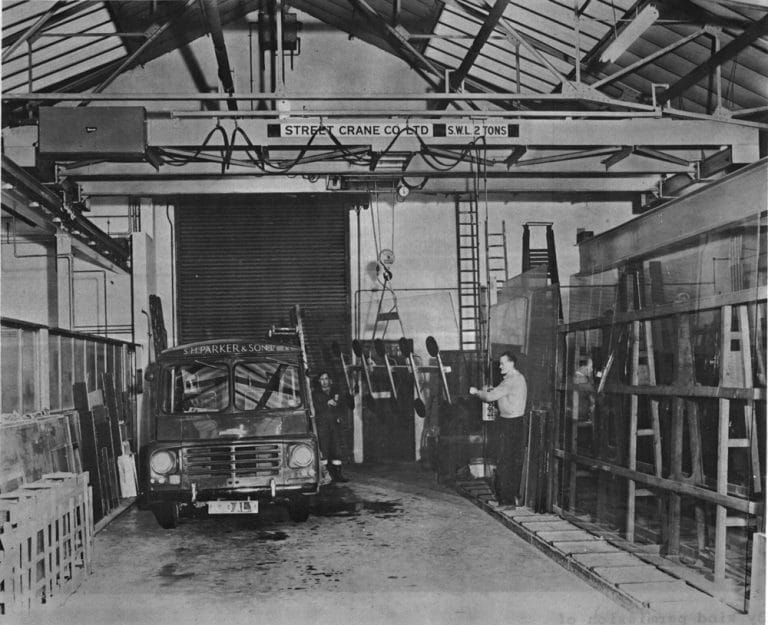
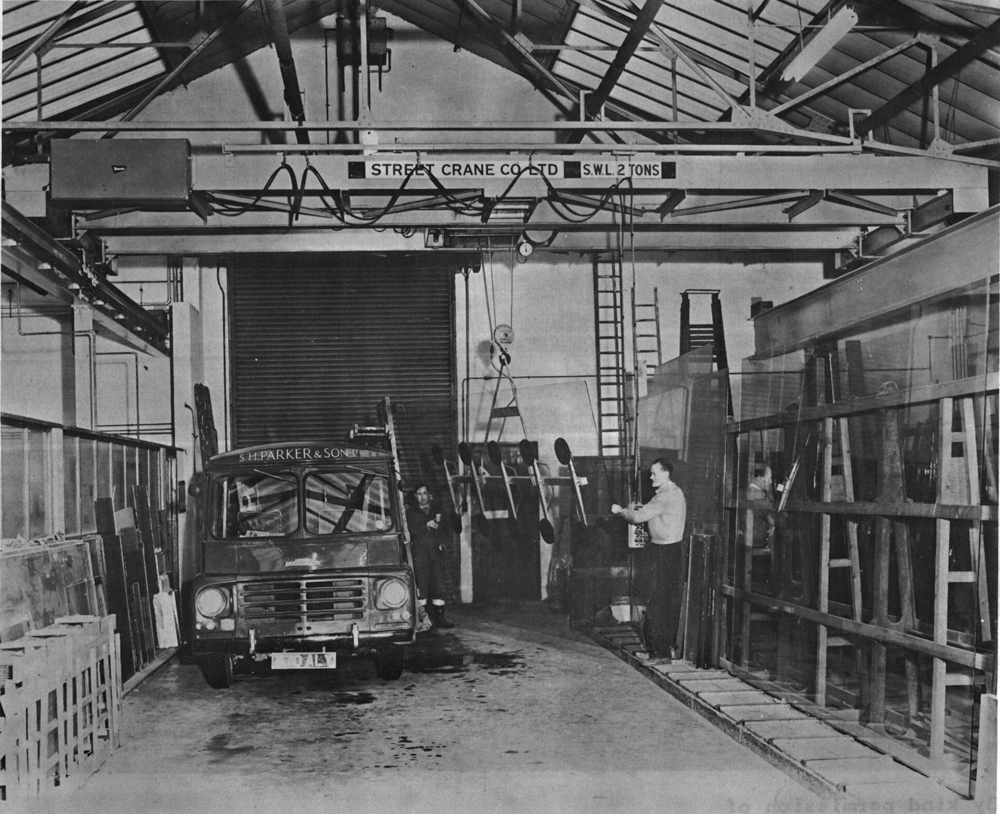
Achieving super smooth acceleration using fluid drives attracted attention. Plate glass was in high demand and the industry needed to lift ever larger glass sheets onto cutting lines. Crane motion control was only part of the equation. Peter quickly recognised the need for and developed vacuum lifting devices for use on cranes to handle the fragile glass sheets. He didn’t stop there. He went on to develop vacuum lifting devices for handling products ranging from marble slabs to portable building panels, taking the Street name into more and more industries.
Ups and Downs
Throughout the 50’s and 60’s, the company built on its successes. The current Street ZX hoist range is the sixth generation of hoisting equipment the company has designed and serially manufactured. Early generations started with the Street S4 open winch hoist in the 1950s, designed to meet the heavy‐duty needs of the steel industry. “Inchmiser” monorail hoists followed in 1960s and 70s for ultra‐low headroom applications.
Former managing director Andrew Pimblett, now Street Crane’s longest serving employee, remembers, “Looking back to when I joined in 1969, the contrast to those early years could not be greater. After the post war reconstruction boom years, it soon become clear that the 70’s were going to be rough ride.”

Throughout his time at, first, Oundle School and then university, Will indulged his other great passion, playing cricket, which he continues now within the ECB league.
The company had recently purchased a factory on its current site in the High Peak and was starting to expand its horizons. The oil crisis, structural changes in the economy and geo‐politics saw heavy industry spiral into decline and with it the UK crane market started shrink.
“There were over 60 crane manufacturers, each with their own technology. Herbert Morris, John Smiths of Keithley, Clark Chapman, Wellman Booth and so many more. Making it even tougher, European crane manufacturers were entering the UK market too. If you had told me then, that 50 years on, only Street Crane would survive in the UK as a volume crane and hoist manufacturer, I would not have believed it,” Andrew explained.
Even in these grim times, Peter Street’s ebullience could not be held‐back. Andrew remembers fondly, “Just after I was appointed sales director, I arranged for Peter to be interviewed by a journalist who asked him what he could lift on a vacuum pad. In his enthusiasm, Peter reeled off a long list of the materials we had vacuum lifted and then threw in at the end that we could even lift a bag of bananas. To my horror the journalist jumped at this and offered to write a story if we could send him a photograph of a crane lifting a bag of bananas.”
The company had certainly never attempted to lift a bag of bananas. “The idea seemed totally bonkers to me. Not to Peter though, who turned up at the factory with a giant plastic bag full of bananas which he explained was how they were imported into the country. Over the next few days, he experimented with different grades of rubber pad material and duly delivered a photograph of bananas being lifted by a Street Crane – which got us huge publicity,” added Andrew.
Still the company managed to innovate even in these difficult times, launching in the 1970’s the V100 hoist which had a single machined fabrication incorporating the hoist gearbox and traverse drive.
By the 1980’s Street was the UK’s top‐selling EOT (electric overhead travelling) crane brand. The decline of the domestic industrial base meant future growth would be difficult and with global predators poaching market share, the company determined the best way forward was to take the fight back to them and become a poacher. The brave decision was taken to move into volume hoist production, move beyond home shores and become a supplier of hoists to independent EOT crane manufactures around the world.

A small family firm verses multinational corporations! The odds were not favourable. However, team Street had accumulated vast experience, talented engineers and management ingenuity. They found chinks in the armour of the multinationals.
The international giants were taking business from smaller independents just as Street had seen them do in the UK. Perhaps most important, the small independents could not invest sufficiently in designing more advanced hoists and controls increasingly demanded by industry. Instead, they often had to source them from the same multinationals who were also their competitors.
Street recognised that the requirements to compete in this market are advanced hoists based on a modular design concept, with multiple models and variants made from a minimum number of components, and with fast assembly and delivery times. They also knew that trust would be key to winning over the independents.
The first range of Street hoists to meet these world market needs was the NX hoist range which had the motor inside the hoist drum to optimise hook approaches. The company built a new hoist works with a dedicated machine shop, flowline assembly, powder coating line and test cells.

Trust came from a promise never to enter international markets with whole cranes or setting-up crane manufacture in overseas territories. With a new range of hoists easy for partners to specify and customise to their needs, and the promise of non-competition, many independents seized their opportunity to break the stranglehold of multinational domination. With the NX hoist they could also compete on an advanced technological level.
Crane making remains central to the Street business model but supplying hoists and crane components to over 100 partner crane makers around the world now forms the bigger part of the company’s turnover. Street believes 75 years of experience and the progressive design evolution of their crane technology are what enables them to deliver the high levels of reliability demanded by this market.
Continuous Development
The product development history at Street is one of multiple incremental steps through continuous investment and innovation. At times, up to ten percent of the entire workforce is engaged in designing and developing new products.
In the 1990s most leading crane brands designed ‘world hoists’ to comply with design standards from ISO, EU, USA, and others, at internationally competitive prices. Street Crane saw that the need to meet this world price point was driving all hoist designs to evolve into the same basic direction.

Again, Street Crane seized the opportunity and set out to make their world hoist different. The ZX3 and ZX4 hoist range was born and rapidly became a great success thanks to a fundamental safety advantage,
a timely innovation when the legal responsibilities being placed on crane owners were increasing significantly.
The ZX specification included a gearbox brake to hold the load safe in case the motor brakes would not. Competitor hoist designs had sacrificed easy access for checking the safety of key components. In contrast, the new Street ZX hoist provided improved access for inspecting gears by including a gearbox lid. Adding an external hoist brake allowed easy inspection or setting in minutes. The sales team and distributors successfully argued these, and other features gave the hoists a lower cost of ownership. Though not the absolute lowest price product in the market, the ZX concept was so successful that sales volumes in the mid-2000s started to outstrip production capacity. Recognising the ZX was a winner, Street’s talented design team were tasked with furthering the high reliability serviceability concept. They also reengineered the hoist to promote greater volume production and incorporated emerging control technology including VFDs (variable frequency drives) and PLCs (programmable logic controllers). The result was the current ZX6, ZX8 and ZX10 ranges which rolled out between 2008 and 2014. The range of hoist models has continued to expand and evolve with new models due to be launched later this year and next.
World-Class Hoist Factory
Due to continually increasing demand for the ZX hoist, Street invested £3 million in a new world-class hoist production factory in 2014, with the capacity to assemble 3200 hoists per year based on single shift working. Over 100 visitors from around the world joined the company to celebrate the opening. This was followed by a major project in 2016 to re-equip and modernise the crane factory to the same high standards. Recently added is a new hoist drum production facility with the capability to machine drums up to 6m long and 950mm diameter.

Street’s relationship with its partners around the world means sharing experience strengthens both parties. Keeping independent crane makers and growing their numbers is key to future growth and protecting market share from multinationals. The company has always invested in software tools and the launch of “Eazycrane” in 2020 has been the biggest yet.

Eazycrane, is an online crane configuration program which puts 75 years of Street Crane know-how and expertise at the fingertips of distributors. Taking ten-years to develop, the project was entirely self-financed. Eazycrane automates crane design, drawing, component selection, quotations, and order processing. Importantly, it enables the company and its distributors to work within a single system. Any internet connected device can be used to access it, even a mobile phone.
The distributor portal provides sales office systems, the ability to generate technical proposals and quotations in various currencies for a huge range of cranes and hoists up to 50 tonnes (55 US tons) capacity. Metric or US units are selectable as are design standards including ISO, European, USA and UK. The technical function provides own-brand crane drawings which can be customised to building dimensions, high quality data sheets for the hoists and crane components selected. Crane assembly drawings for crane production are also produced.
Chris Russell, Street Crane technical director led the Eazycrane project and explains, “My team and I were tasked with delivering Eazycrane in time for our 75th birthday and I am delighted to say we went live with crane kit and components functionality last year and the full crane function in January 2021. It has been a mammoth task with a team of engineers here at Street and a team of software coders across the globe including in England, Scotland, India, and Estonia. Work on version two is already on the way and this will automate the processing of our parts business, allow our dealers to place stock orders and create production and testing documentation and bespoke user manuals for their customers.”
Staying Ahead in Future
Chris also has responsibility for product development and attests to Street’s relentless drive to stay ahead, “When I joined Street, I found the attitude of the board of directors and shareholders a breath of fresh air. I remember explaining that design work for a range of ZX hoists was complete, but we needed thousands of production drawings. A few weeks later we had a complete team of design engineers and draftsmen working shifts around the clock. We have a formidable team of young, qualified crane and hoist designers who can deliver new designs. We also have experienced engineers who know what the market wants and crucially shareholder commitment which all adds up to a winning formula for the future.”

Explaining why he believes Street Crane are still increasing their market share 75 years on, managing director Gus Zona said, “Successful companies must innovate and adapt to deliver what customers want, we listen carefully to those on the frontline owning and operating cranes and we find they want more than just the lowest price. They know lifetime cost of ownership is the smart measure, they want a high level of serviceability to reduce planned downtime and high reliability to avoid costly unplanned downtime. They value additional safety features which allow them to meet the burdensome legal responsibilities to keep employees safe. These are the needs ZX hoists and other Street products are designed to meet and what make Street different.”
Reinforcing the value to Street of their global partners, Gus continued, “We also listen to what our distributors want which is simply a better deal than they get from other hoist and component suppliers. They do not want to buy hoists from us only to find that we would compete with them for cranes or valuable aftersales business. They do not want to find their regional competitors are selling Street products and they do not want to find our products are being sold into their market under different brands. Our distribution model is therefore sole distribution deals in given territories in which we do not compete. ZX hoists and Street crane kits are only available under the Street brand so distributors are assured there is no backdoor into their markets. We look for partners who want to be different, who recognise the ability to make a unique crane offering in a ‘me too’ market is the recipe for success.”
“Had Peter Street survived he would have celebrated his 100th birthday in 2021 so we also have good reason to remember our founder and the generations of colleagues who did the groundwork upon which we are now building our future,” Gus concluded.
Family Values
Underpinning the Street Crane history is its strong sense of family values. Peter’s eldest son Martin Street has been at the helm as Chairman since 1996 and he provides an interesting insight into the company ethos. “I am often asked how we thrived in a market with so much competition, when so many failed. I put it down to ‘Brittelstand’ values, by which I mean we have much in common with the German Mittlestand of independent family-owned engineering businesses about which much has been written.
Family businesses can have significant advantages over publicly traded corporations and critically we are not beholden to the short-termism of the markets. Street Crane has invested non-stop over decades in product and software development to enable us to deliver the advanced lifting solutions the market demands. In a family business long-term focus can be combined with an entrepreneurial ideology and we can make quick decisions when there is advantage to be gained. I like to think the generational continuity has helped us to build the vital ingredient of loyalty between the company and our great Street team of colleagues and business partners.”
Martin’s son William who has a background in business finance, joined the company this year and enthused, “It is thrilling to have joined Street Crane. It is so special to join something your family helped build from the ashes of WWII. The challenges of the Covid pandemic are new but the brilliant extended family team throughout the Street works and our global partners are meeting it head on. I am sure, if my grandfather were here today, he would approve and be proud of everyone.”

Street Crane welcomes grandson of founder
November 13, 2020

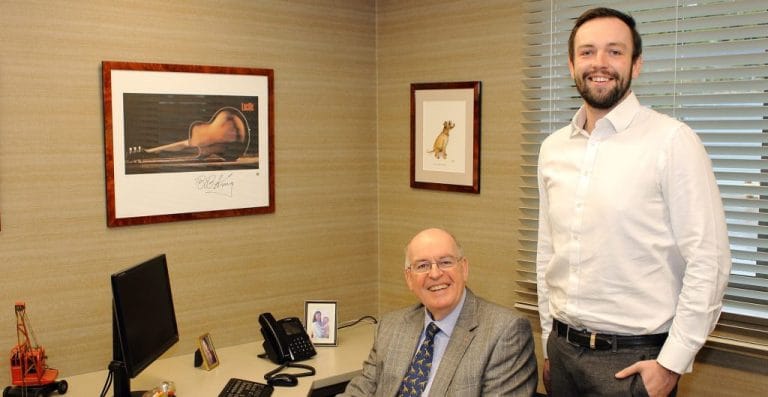
Joining as an accountant, William Street is the third generation of the family to work at Street Crane Company. For the last five years, Will has been honing his accountancy and business finance skills at one of the country’s top accountancy firms, BHP in Chesterfield and Sheffield, where he gained his ACCA qualification.
Will’s father and chairman of the business, Martin Street, said, “It gives me immense pleasure and pride to see Will join the business as the 3rd generation Street to do so. I hope he will enjoy a long association with the great people and clients who he will be working with at the company in the UK and throughout the world via our distributing partners.’’

Prior to joining BHP, Will gained both a BSc (Agriculture, honours in animal production science) and MSc (Applied Animal Behaviour and Welfare) at Newcastle University. “There are always crossovers from university degrees to the working world, even though on the face of it, it would appear that agriculture and cranes could not be further apart. Agriculture is all about efficiencies, and getting the most output from your resources, and this is something I believe translates into manufacturing,” Will explained.
Will first gained experience of working at Street Crane in his university gap year when he took on a job in the packing and shipping department. Here, he successfully designed and implemented a new packing system. “I am looking forward to the challenge of learning all aspects of the business. The recent launch of the Eazycrane software-based crane design, estimating and manufacturing package, shows that Street Crane embraces technology and new ideas to stay ahead of the competition. This makes it an exciting time to become part of the team that is driving the company’s success,” said Will.
Throughout his time at, first, Oundle School and then university, Will indulged his other great passion, playing cricket, which he continues now within the ECB league.
It is has been 75 years since Will’s grandfather, Peter Street, a WWII spitfire pilot, set-up the business with his demob money of just £88. Will enthused, “I am thrilled to be joining Street Crane, it is special being able to join something that your family helped build from the ashes of WWII. What both my grandfather and father have achieved is nothing short of phenomenal. With my grandfather starting off repairing and servicing cranes in Sheffield in the 1940s and then my father turning it into the global supplier you see today, one day, it will now hopefully be me helping to take Street Crane to the next level.”

Steel & Alloy drives ahead with Street Crane
June 26, 2020
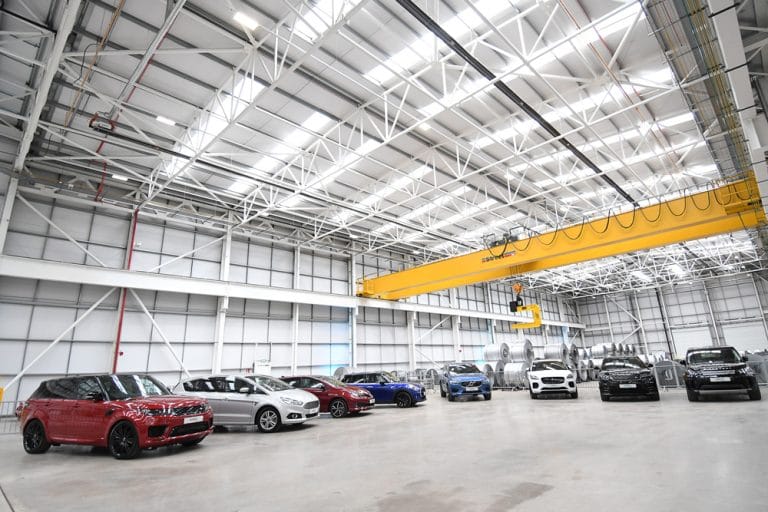
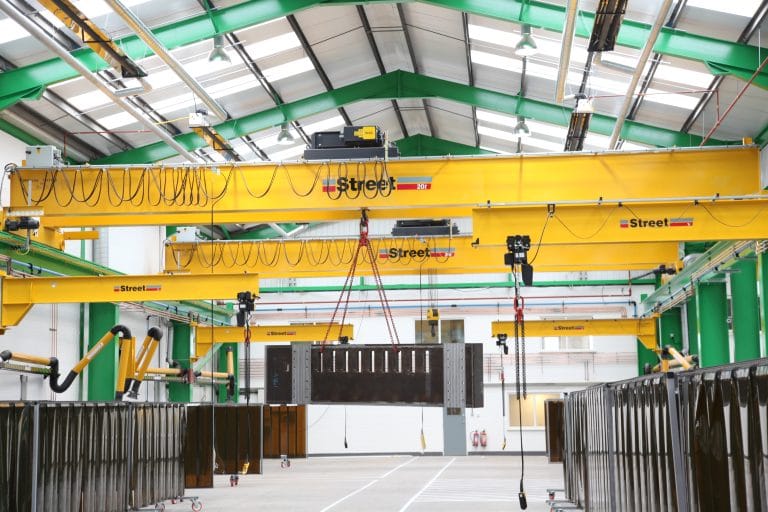
Steel & Alloy, a leading UK automotive supplier has future-proofed its business with the opening of a new state-of-the-art alloy processing facility, fully equipped with three heavy duty Street cranes.
The £27 million investment constitutes the first phase of the development, which has added 10,000 square metres to the site. Over the next two years, further investment will see the addition of three new production bays, adding a total of over 25,000 square metres. The new factory allows the business to increase its capacity.
Max Coleman, Operations Director of Steel & Alloy explains. “Our business is celebrating its 50th anniversary and this new development is a perfect way for us to mark this milestone. The new plant runs high-strength slitting lines as well as flexible presses, suitable for making lightweight alloy components, which are in high demand in the automotive sector. Vehicle manufacturers are making lighter and stronger cars, improving the safety of the passengers and reducing the impact on the environment. To support the supply chain, we need to produce lighter and stronger parts. These levels of investment clearly demonstrate our faith in the UK automotive industry, where we are recognised as the largest independent steel processor.”
The deal with Street Crane is worth nearly £1 million and includes the supply and installation of three heavy duty cranes. Two of the cranes have a 35 metre span and a 35 tonne weight capacity, whilst the third crane is slightly smaller with a capacity of 30 tonnes. They are used to move the large steel coils from storage through the production process and have each been fitted with the latest anti-sway technology, to ensure maximum safety and efficiency. They also incorporate Street Crane’s radio controller module, allowing users to operate the cranes remotely and each crane is fitted with Street’s heavy duty VX hoists.

Steel & Alloy first started processing steel in the late 1960s and has grown substantially, now operating six UK manufacturing sites. During 2012, Steel & Alloy was acquired by Gonvarri Steel Services, which was founded in 1958. It owns over 40 steel and aluminium transformation factories, with operations across 19 countries.
Chris Lindley-Smith, Street Crane sales director added, “We are delighted to be working with a successful manufacturer like Steel & Alloy. Their focus on quality and innovation sets them apart in their sector. This major investment in alloy processing will help them grow their business as vehicle manufacturers seek new ways to improve the efficiency of their products in the future. We have a strong track record in the automotive sector and another contract like this demonstrates the value of our experience.”


Street Crane accredited to JOSCAR level 2
January 10, 2019
Street Crane, one of Europe’s leading manufacturers of overhead cranes and hoists, has achieved accreditation to Stage 2 with JOSCAR, The Joint Supply Chain Accreditation Register.
JOSCAR was established through an initiative by the trade organisation, ADS. It is administered by Hellios International and was designed to help prime contractors and their suppliers to the defence, aerospace and security sectors.
For JOSCAR Stage 1, suppliers complete a basic online registration questionnaire. Those seeking level 2 accreditation must provide more detailed information, which is fully documented and validated by an independent team of experts. The database of highly qualified specialist suppliers is available to all key purchasing organisations.

The data is regularly checked and audited and made available to all participating purchasing organisations. As a key supplier of mission-critical overhead cranes to the aerospace, defence and space sectors, Street Crane fully supports the JOSCAR philosophy and sees the clear value that this initiative will bring to the industry. The business also subscribes to Builder’s Profile, Constructionline, LEEA and the Achilles system.
Chris Lindley-Smith, Sales Director at Street Crane, explains, “In the past, dealing with defence and aerospace sectors meant having to provide very similar information for each and every project bid. Consolidating this information into one system and making it securely available to all defence and aerospace contacts will save time and money all round. We support anything that allows us to improve efficiency and drive down the cost of sales. As many of these projects are effectively funded by the public purse, it is vital to avoid waste at every turn and deliver the best value for money possible. I am proud of all the work our staff have done to secure this accreditation.”
Street Crane is the UK’s largest overhead crane and hoist manufacturer, established over 70 years ago. The family-owned business has annual revenues of over £70 million and employs 350 staff, with 20 percent dedicated to R&D. This focus on research and development means that Street Crane now offers one of the broadest ranges of overhead lifting equipment available. With equipment availability rates in excess of 99 per cent, its products are used by many world leading manufacturers, where speed, safety and reliability are critical to their business operations. Street is a major exporter, supplying crane kits and component parts through a network of over 90 partners across 48 countries. It has installed more than 100,000 overhead cranes around the world and its main manufacturing plant is located in Derbyshire, with service and special project engineering factories in Sheffield.
Street Crane announces changes at the top
July 11, 2018
Andrew Pimblett steps down as MD after nearly half a century with the business.

Street Crane has announced that Andrew Pimblett is stepping down as Managing Director after 49 years with the business, 38 of which he served as a board member. His successor is Gus Zona, who has worked for Street in the roles of both Sales Director and Operations Director.
Andrew, who has been Managing Director for 28 years, has spent his whole career with Street Crane. He joined the company as a technical apprentice in 1969 and quickly worked his way up the ranks. He was made Sales Director in 1980 before being appointed deputy Managing Director and then Managing Director in 1990.
Throughout this time, Andrew has been instrumental in transforming Street from a local crane fabricator into the UK’s largest crane and hoist manufacturer. Also establishing the company as a leading supplier of hoists and crane components to other crane manufacturers worldwide.
Andrew and his team have consistently grown Street’s UK crane manufacturing operation in a period which has seen a sharp decline in crane purchases from British manufacturers and competitors go out of business. From a standing start, he led the company into the global hoist and crane components business, which is now the larger part of Street.
He said:
“When I joined Street it was a very small company which manufactured custom made cranes predominately for the Sheffield steel industry. It was always my ambition that one day we’d be able to compete with the big names in the pre-engineered volume crane and component sector, but most people told me that would never happen.
To have proved them wrong is very satisfying. Street has grown and evolved rapidly, achieving phenomenal success driven primarily by our commitment to investing in product development and innovation.
We now have a vast engineering team, including many experienced designers as well as a large number of younger graduates, all of whom are focused on designing new products. This has helped us to create one of the biggest ranges of cranes and components in the world, which we sell to more than 100 distributors globally and to end users in a vast number of sectors in the UK.
I’m incredibly proud of these achievements and of all the people at Street which have been instrumental in this success.
Being Street’s Managing Director is however, a very demanding job that takes you all over the world, so I feel the time is right to pass the baton. I have no doubt that Gus is the perfect person for this job, his appointment is a result of a long standing succession plan and I wish him every success”.
Gus is an experienced and long-serving member of the Street team having joined the company in 1988. He worked initially in production control and purchasing before serving two terms on the board firstly as Sales Director and latterly as Operations Director. In between these two roles at Street, Gus was Managing Director at Lloyds British Testing.
Gus added:
“It’s going to be a challenge stepping into Andrew’s shoes but I’m looking forward to taking on this new role and building on Street’s achievements.
There is a huge opportunity to grow the business even further by expanding our distributor network and continuing to bring technologically-advanced products to the market. This will include cranes that self-monitor safety, servicing and maintenance and will have a huge impact on the sector. With our R&D and engineering capabilities, our aim is to be at the forefront of these digital developments.”
Andrew will remain at Street Crane as a non-executive Director advising on strategic matters and working three days per week. Throughout this time, Andrew has not only been instrumental in transforming Street from a local crane fabricator into the UK’s largest crane and hoist manufacturer but establishing the company as a leading supplier of hoists and components to other crane manufacturers worldwide.
Street Cranes installed at world-leading space facility
December 12, 2017
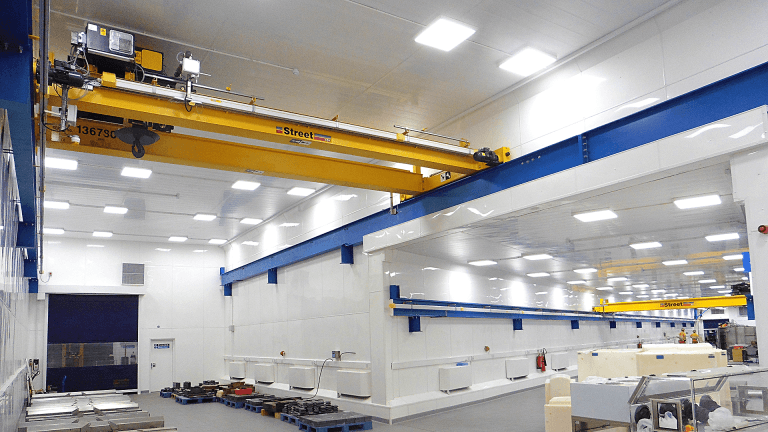
A world-leading space facility is using 14 new overhead cranes from Street Crane to help lift and manoeuvre highly specialist equipment around the 80,700 sq ft site.
The RAL Space facility in Oxfordshire forms a key part of the Rutherford Appleton Laboratory, which is operated by the Science & Technology Facility Council (STFC). Involved in more than 210 space missions, RAL Space is home to one of the most sophisticated space design, production and research facilities in Europe. It comprises thermal vacuum chambers, 15 cleanrooms and low vibration chambers, which recreate conditions in outer space and at blast-off.
Working with main contractor Willmott Dixon, Street Crane designed and installed 11 new overhead cranes with lifting capacities ranging from 0.5 tonnes to 10 tonnes. These are used throughout the building for lifting and moving scientific equipment and instrumentation and other specialist materials used by RAL.
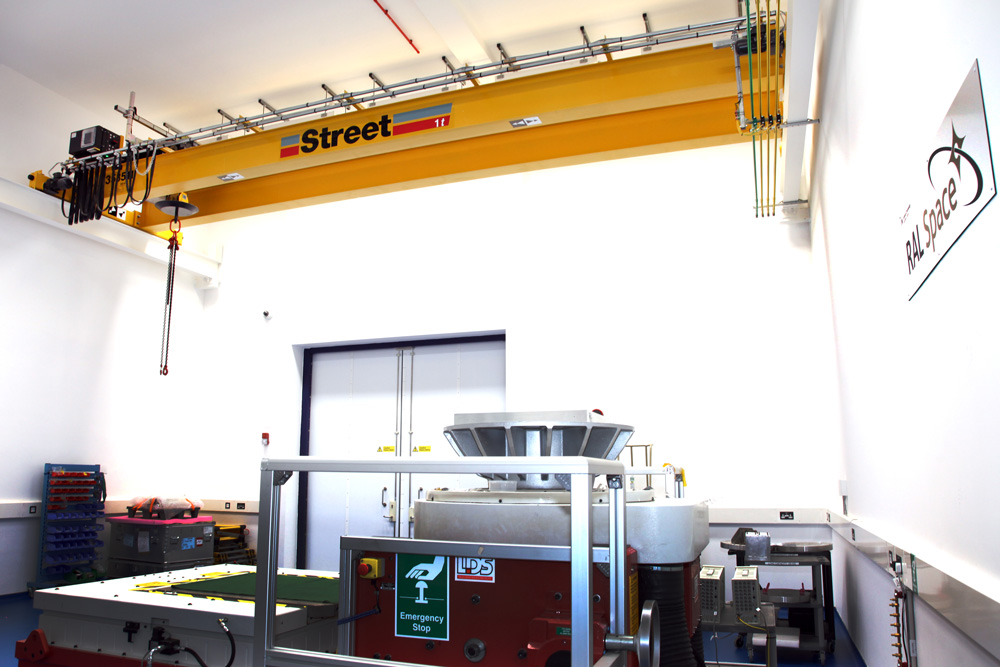
Two larger cranes have since been installed, each featuring specially-designed dual hoists that are integrated into common hoist trolleys for independent lifting operations. The main 50-tonne hoist is used for infrequent heavy lifts and the 15-tonne hoist offers a faster lifting speed intended for smaller loads and regular use.
The other crane is similarly configured with a 30-tonne lifting capacity and with an auxiliary 5 tonne hoist fitted. This 30/5tonne crane spans the full 35-metre width of the facilities hall and will be used to transfer space instrumentation and equipment across to the hall’s clean rooms for assembly and testing.
Chris Lindley-Smith, sales director at Street Crane said: “We’re really proud to have played a part in RAL Space’s world-class space research and technology development facility.
“The larger cranes’ dual hoists have been designed specifically to suit the operation’s requirements on quite significant structures that both span over 35m.
“The other smaller cranes will ensure that space instruments weighing up to 10 tonnes can be lifted and moved very effectively, reliably and safely. Our ZX hoists improve performance and safety while at the same time reduce the need for maintenance. These benefits are essential in such a demanding environment, which has to meet the exacting needs of customers and collaborators.”

This is the second STFC facility that uses overhead cranes designed and installed by Street Crane. Two overhead cranes also form part of the Boulby Underground Laboratory, a world-class £1.7m science facility located 1,100m underground in Yorkshire.


Street Crane enhance productivity at new £20M robotics factory
October 20, 2017
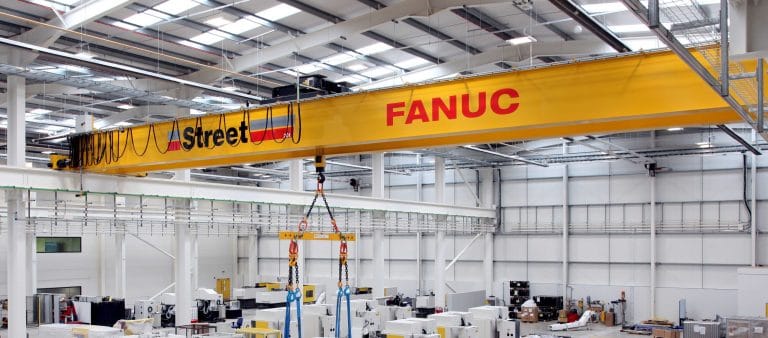
Street Crane has supplied and installed overhead cranes at Fanuc UK’s new 107,000 sq ft purpose-built headquarters at Ansty Park in Coventry.
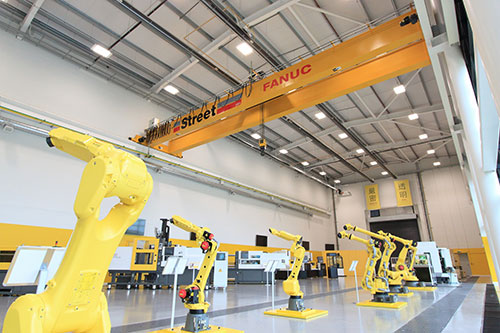
Fanuc builds around 6,000 robots, 125,000 servomotors, 84,000 servo amplifiers, and 25,000 CNC controllers every month to serve the wave of demand within manufacturing for fourth Industrial revolution technology. The new £19M state-of-the-art facility has brought the company’s robotics, machine tools and factory automation activities under one roof. It includes design, manufacturing and training facilities together with offices and a large showroom area.
Building contractor Bowmer & Kirkland appointed Street to design the overhead cranes prior to construction starting. In order to maximise the available “envelope” within the roof space and facilitate installation, a two-stage process was agreed, which saw Street install the cranes before the roof was fitted, including full weather protection. The cranes were then fully commissioned during the second visit and handed over once the facility had been finished.
Three double-girder cranes have been supplied as part of the facility’s 48,000 sq ft workshop, which retrofits, assembles and tests industrial robots, CNC machines, and turnkey automation systems. Radio remote controlled, the cranes have a lifting capacity of 20 tonnes and are used for the loading and unloading of vehicles, moving machines around the workshop area and assisting with assembling and disassembling of equipment.
Mark Arbon, engineering manager for Fanuc UK said, “We have been very pleased with the overhead cranes installed by Street Crane. They have already proved invaluable in terms of improving the efficiency of our heavy material-handling activities and going forward, will make the use of the workshop space so much more flexible, allowing us to easily move machines and equipment to suit our ever-changing needs.”
a spokesperson for Street Crane commented, “As we were involved during the early stages of this project, we provided all the up-front consultation work to the building and steelwork contractors, including budgets, crane design dimensions, and structural loading information. This detail was then factored into the facility’s construction programme and resulted in the cranes being installed more quickly, efficiently and cost effectively.”
“Now fully commissioned, the cranes offer Fanuc safe and efficient lifting as well as very durable equipment which will meet the company’s changing needs. This durability is a result of Street’s ZX wire rope hoists which have been designed to significantly enhance safety, reliability and maintainability.”
Street helps Formaplex to boost production capacity
March 1, 2017
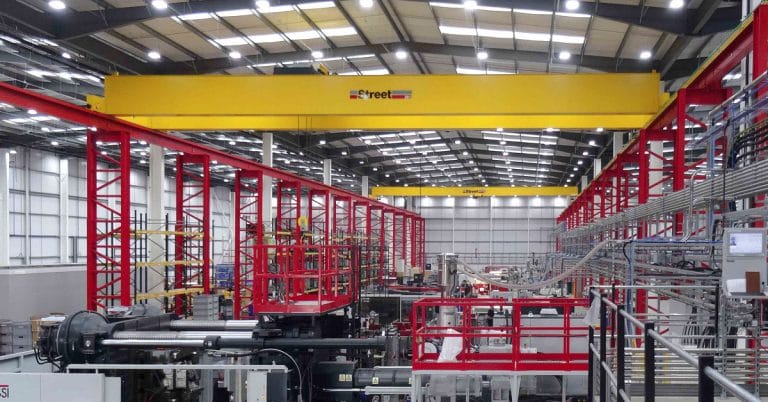
Street Crane has helped a leading component manufacturer to boost production at a new 120,000 sq ft manufacturing facility in Portsmouth.
Formaplex, which makes specialist components for the automotive, defence, aerospace, marine and industrial sectors, selected Street to supply and install overhead cranes at its new Voyager Park factory.
The lifting equipment includes a 30-tonne double girder, 5-tonne single girder crane and 132m gantry system. In use 24 hours a day, seven days a week, the cranes lift and position injection mould tooling into presses. A total of 16 mould presses are in operation, producing three million moulded components a year such as dashboards, centre consoles and complete bumper systems, predominantly for the automotive industry.
Chris Carter, operations director at Formaplex said: “We’ve had a strong relationship with Street Crane since they installed our first crane in 2005. The equipment has proved to be extremely reliable and as our business is so dependent on precise lifting, we selected Street Crane again to supply and install cranes for our brand new factory facility.
“We’ve been very impressed by Street’s technical expertise, particularly during the installation process and its after sales preventative maintenance service which will ensure that cranes are maintained to a high standard. We now have a total of eight Street cranes across four manufacturing facilities which are vital for a vast range of operations.”
Chris Lindley-Smith, sales director for Street commented:
“These are high performance cranes featuring modern Street ZX hoists, providing Formaplex with the latest lifting technology, offering maximum reliability and minimal maintenance. In such a demanding environment, this type of technology is essential to ensure that production remains as efficient and safe as possible.”
The new technical centre ‘Voyager Park’ has increased capacity by 50% and means Formplex now has operations spanning 270,000 sq ft across four sites. The new facility will meet a growing demand globally for lightweight moulded components and incorporates in-house finishing, assembly and metrology departments.
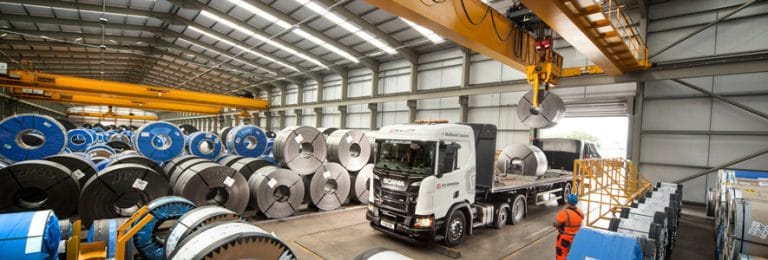
Street Crane awarded new JCB contract
September 5, 2016
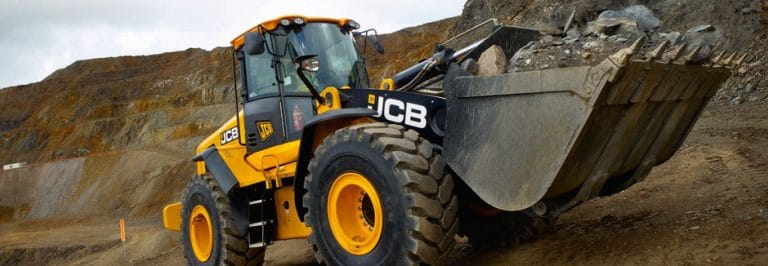
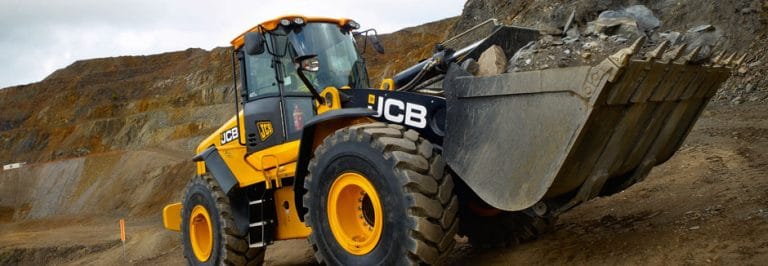
Following a competitive tender, Street Crane has secured an order with JCB, the world-leading manufacturer of construction equipment.
The contract has seen Street Crane design, supply and install four overhead cranes at JCB’s Staffordshire site. These include three with a lifting capacity of 10 tonnes and a double girder crane which can lift 20 tonnes. Now fully operational in JCB’s workshop, they are being used to help test and service a broad range of JCB products, including excavators and wheeled loaders.
Nigel Backhouse, operations manager at JCB commented: “We needed bespoke cranes that could meet both our existing and future requirements, so we had a very specific brief in terms of hook height, weight limits and service standards.”
The cranes, which span between 11m and 17m, have been fitted with radio remote control, which reduces operational risk for the user. Two of the cranes operate on the same track enabling them to lift in tandem if required, so feature anti-collision software to further optimise safety.
Chris Lindley-Smith, sales director at Street explained, “We worked closely with JCB throughout the tender process, providing on-going advice to ensure that the cranes specified would meet the company’s specific requirements.”
“The reliability and quality of the cranes, backed by our high service levels, will ensure that the workshop can accommodate changing needs, enabling it to operate as efficiently as possible both now and in years to come,” Chris concluded.
Street goes full steam ahead with specialist rail project
August 5, 2016
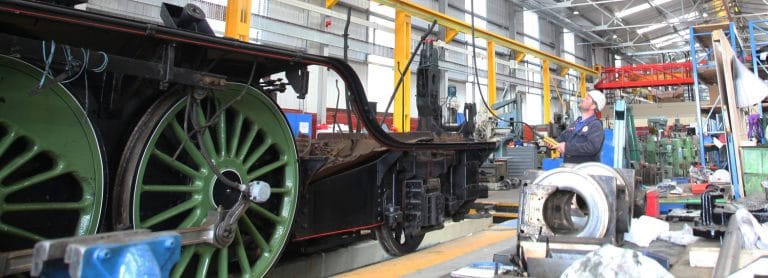
New lifting equipment supplied by Street Crane is playing a key role at a specialist rail depot, which helps to preserve heritage rolling stock, including main line steam locomotives.
The once derelict facility at Crewe Diesel Depot has been completely refurbished by new owner Locomotive Storage Limited. The main tenant is LNWR Heritage, which is responsible for overhauling main line steam locomotives, including boilers and carriages. The site includes a locomotive and carriage workshop, storage area, heavy lifting shop, and a boiler department that manufactures new components.
In addition to an existing 40-tonne capacity Street crane, three new 5-tonne overhead cranes were purchased by Locomotive Storage. Specified for regular daily use, the new Street cranes carry out heavy maintenance lifting and general workshop duties.

Bob Samples, Locomotive Storage’s Depot Manager, said: “The railway industry has used overhead cranes for many years to help lift heavy components and ensure that operations are efficient and safe as possible.
“The new Street cranes are much more advanced than the ones we’ve used previously as the technology has advanced considerably. They’re easy to operate, reliable and almost completely maintenance free which is a major benefit, ensuring we can work without worrying about downtime.”

The three new Street cranes are all double girder construction and designed to maximise hook lifting clearance within the depot and feature ZX hoists making them quick and easy to maintain. Two of the cranes include anti-collision software ensuring optimum safety when used in tandem.
Gus Zona , managing director at Street Crane added:
“We have more than 60 years’ experience of the rail sector and providing cranes for depots of all different sizes and functions. Whether for manufacturing the industry’s latest trains or more specialist work such as that carried out by LNWR, we can provide a range of cranes to suit specific needs and ensure that operations run as smoothly and safely as possible.”
