


 United States

Semi-Portal Cranes
Bespoke semi-portal crane systems from 1t to 200t
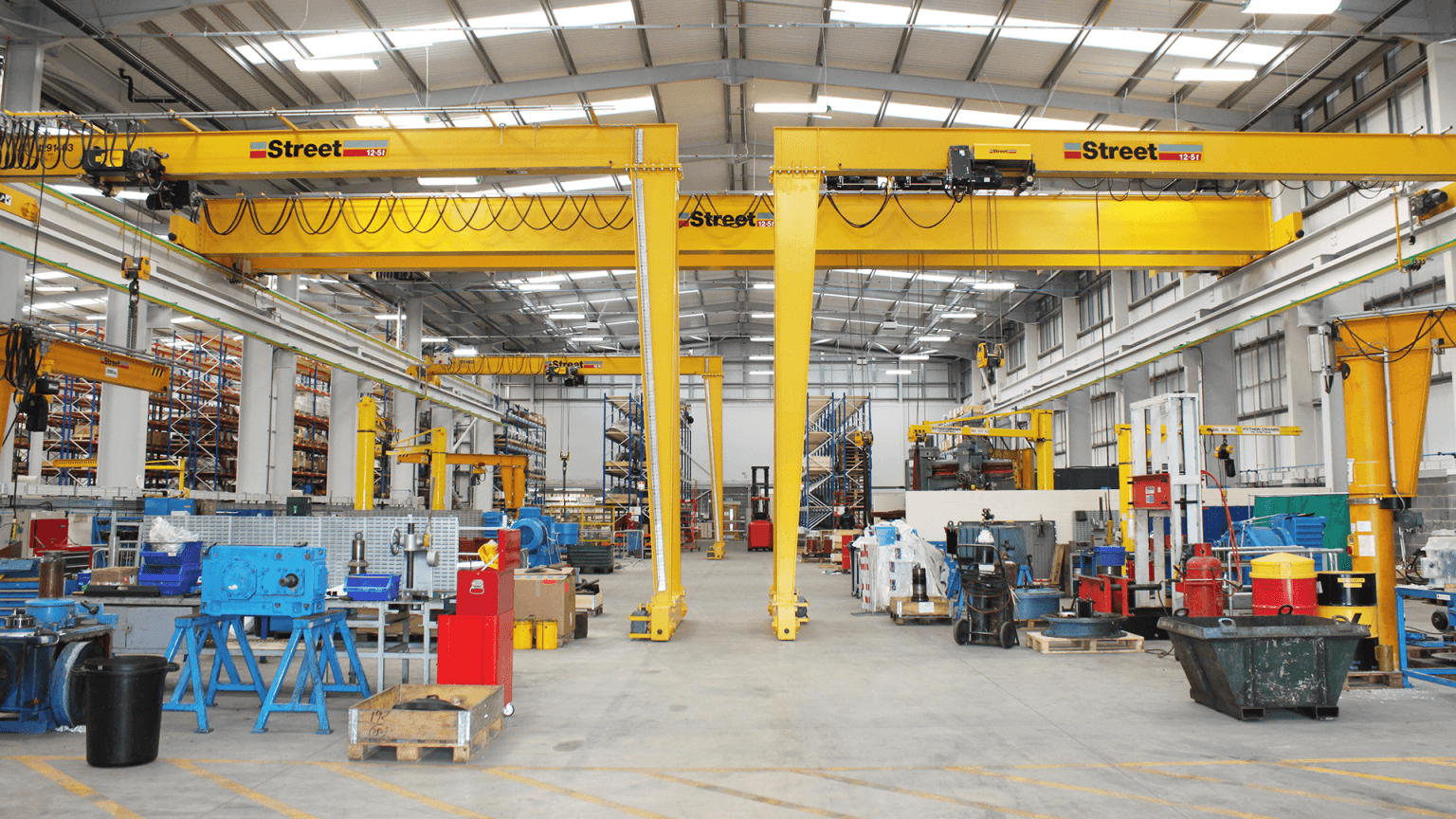
Discover the Power of Street Semi-Portal Cranes
A semi-portal crane gives your site a practical lifting route when your main overhead crane is creating bottlenecks, your floor space must stay clear, or your building structure cannot support a conventional overhead crane on both sides.
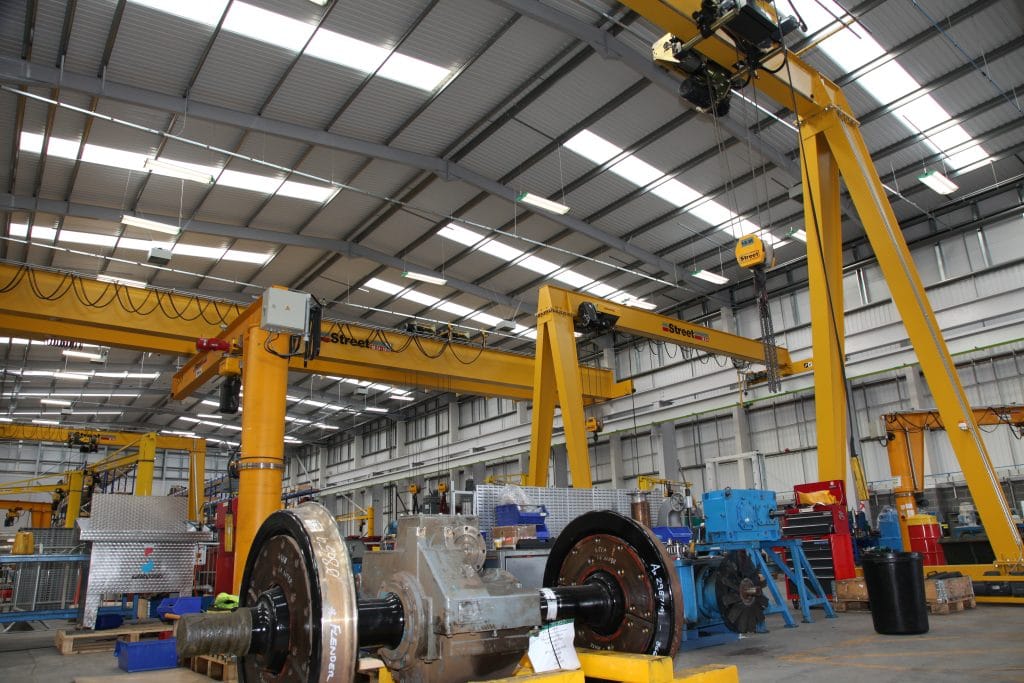
Street Crane designs and manufactures bespoke semi-portal crane systems for UK industrial sites where structure, space and workflow all need careful consideration. We work with end users, consultants and trade partners to specify single or double girder systems around your load, span, hook height, duty cycle, travel path and long-term performance needs.
Depending on capacity, duty and configuration, your crane can be specified with Street ZX electric wire rope hoists, VX open winch hoists or LX electric chain hoists to suit your lifting requirements.
Where Semi-Portal Cranes Are Used
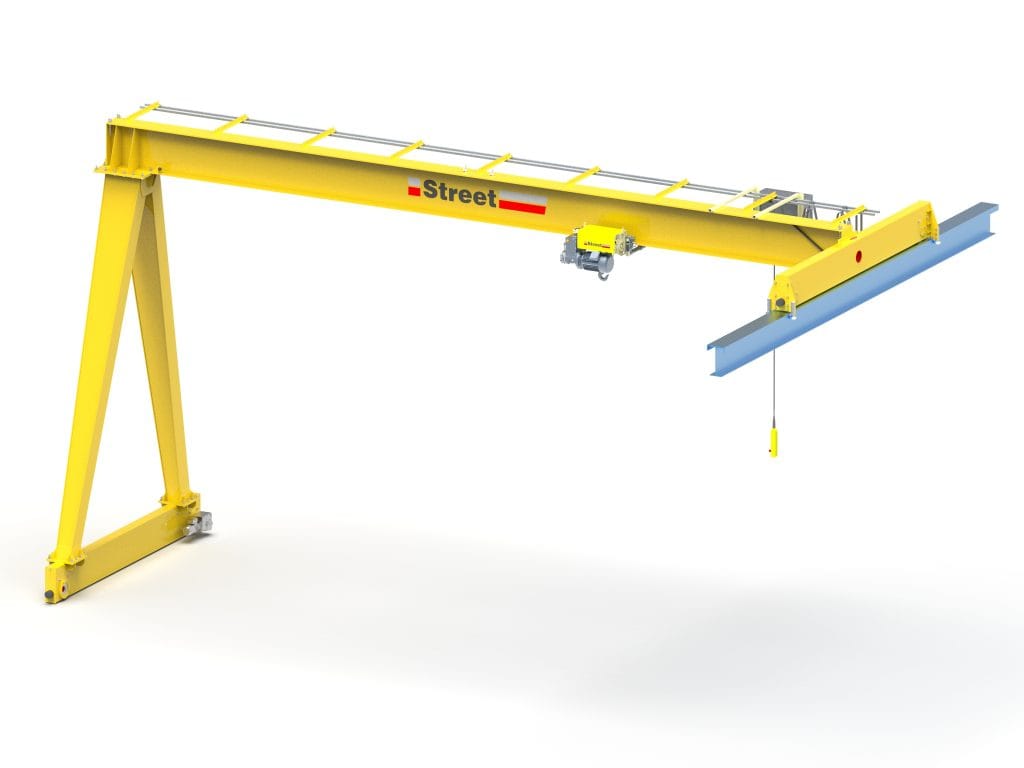
Semi-Portal Crane Configurations & Travel Options
Single Girder Semi-Portal Cranes
Single girder semi-portal cranes are typically used where the load, span and duty cycle allow a lighter and more efficient structure. They are well suited to many light-to-medium industrial duties where local hook coverage, controlled movement and efficient use of space are the priorities.
A single girder arrangement can help optimise weight and structure, especially where headroom and building geometry need close attention. Depending on capacity, duty and configuration, the crane can be specified with suitable Street hoisting equipment, including ZX electric wire rope hoists or LX electric chain hoists where appropriate.
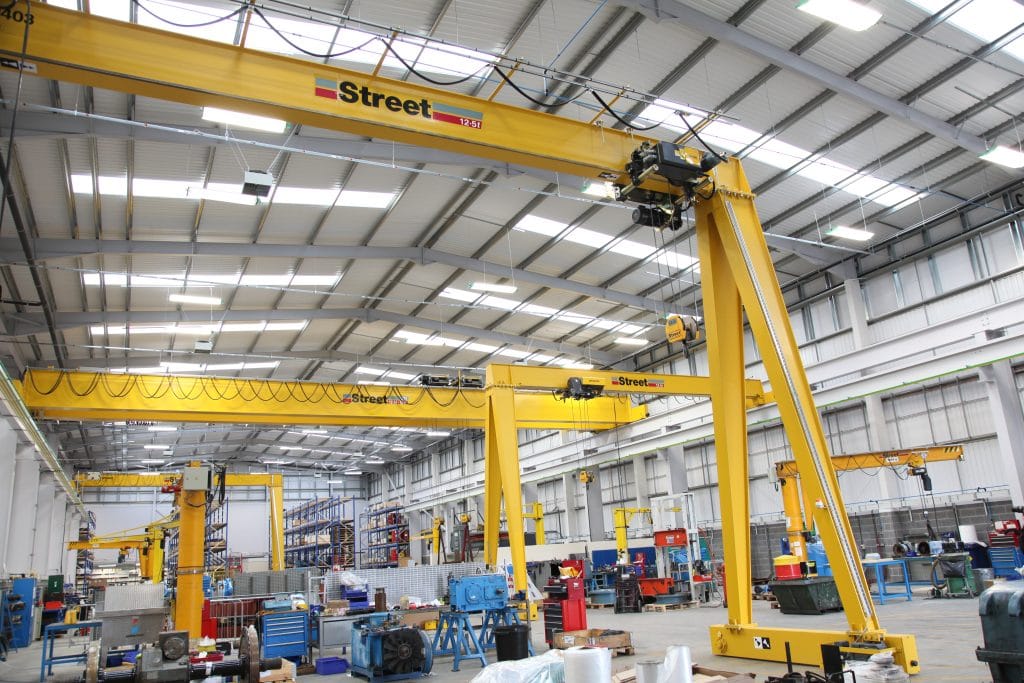
Tracked Floor Travel
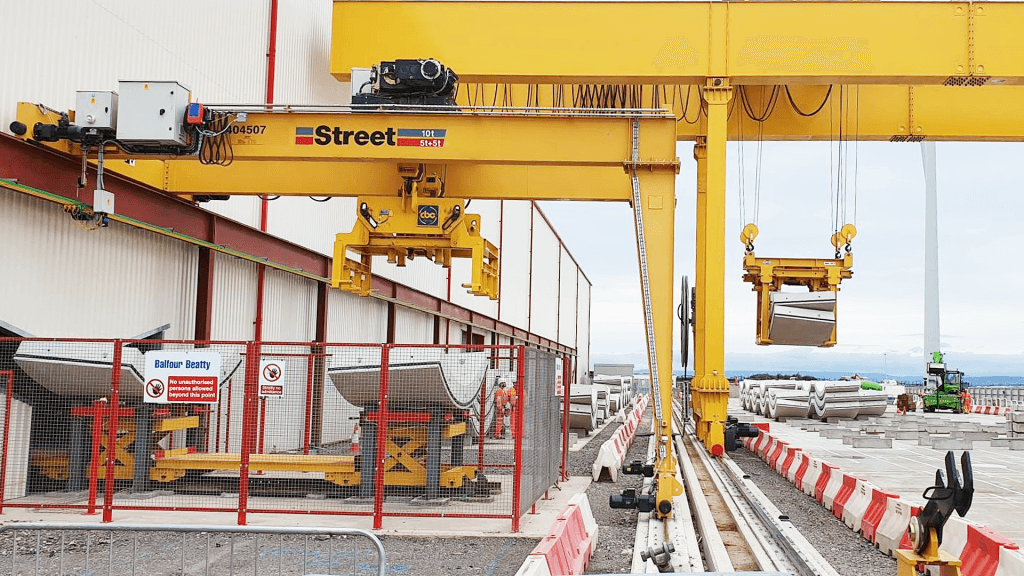
A traditional tracked semi-portal crane uses a floor-mounted rail on the lower side of the crane. This is a robust solution for heavier capacities and repeatable linear travel. It suits applications where the travel path can be clearly defined and protected within the working area.
The floor rail, foundations and fixings must be assessed as part of the crane specification. Street Crane considers wheel loads, floor condition, rail alignment, access routes and how the crane will interact with the surrounding operation.
Semi-Portal Crane Configurations & Travel Options
Single Girder Semi-Portal Cranes
Single girder semi-portal cranes are typically used where the load, span and duty cycle allow a lighter and more efficient structure. They are well suited to many light-to-medium industrial duties where local hook coverage, controlled movement and efficient use of space are the priorities.
A single girder arrangement can help optimise weight and structure, especially where headroom and building geometry need close attention. Depending on capacity, duty and configuration, the crane can be specified with suitable Street hoisting equipment, including ZX electric wire rope hoists or LX electric chain hoists where appropriate.
Tracked Floor Travel
A traditional tracked semi-portal crane uses a floor-mounted rail on the lower side of the crane. This is a robust solution for heavier capacities and repeatable linear travel. It suits applications where the travel path can be clearly defined and protected within the working area.
The floor rail, foundations and fixings must be assessed as part of the crane specification. Street Crane considers wheel loads, floor condition, rail alignment, access routes and how the crane will interact with the surrounding operation.
Why Choose a Street Semi-Portal Crane?
A semi-portal crane is not just a lifting product. It is a structural and operational decision that affects workflow, safety, access and long-term productivity.
Street Crane helps you make that decision with engineering discipline. We assess the capacity, span, hook height, duty cycle, travel path, floor condition and supporting structure before recommending a configuration. Where one side of the crane can be supported at high level and the other at floor level, we can help you use that geometry intelligently, without forcing your site into a full overhead or full portal arrangement where it is not the best fit.
Our modular, finite element optimised structures are developed to balance strength, stability and efficient weight. Where suitable, rail-less semi-portal cranes can reduce floor obstruction for smaller-capacity duties. Where higher duty or heavier loads are involved, we match the crane structure and hoist technology to the realities of your operation.
As a family-owned UK engineering business with nearly 80 years of lifting experience, we focus on practical guidance, long-term reliability and accountability. We want your crane to work safely, smoothly and maintainably, not just on the day it is installed, but throughout its working life.
Why Choose a Street Semi-Portal Crane?
A semi-portal crane is not just a lifting product. It is a structural and operational decision that affects workflow, safety, access and long-term productivity.
Street Crane helps you make that decision with engineering discipline. We assess the capacity, span, hook height, duty cycle, travel path, floor condition and supporting structure before recommending a configuration. Where one side of the crane can be supported at high level and the other at floor level, we can help you use that geometry intelligently, without forcing your site into a full overhead or full portal arrangement where it is not the best fit.
Our modular, finite element optimised structures are developed to balance strength, stability and efficient weight. Where suitable, rail-less semi-portal cranes can reduce floor obstruction for smaller-capacity duties. Where higher duty or heavier loads are involved, we match the crane structure and hoist technology to the realities of your operation.
As a family-owned UK engineering business with nearly 80 years of lifting experience, we focus on practical guidance, long-term reliability and accountability. We want your crane to work safely, smoothly and maintainably, not just on the day it is installed, but throughout its working life.
Frequently Asked Questions About Semi-Portal Cranes
When should you choose a semi-portal crane?
A semi-portal crane is worth considering when your main overhead crane is creating bottlenecks, your production teams need dedicated local lifting, or your building cannot support a conventional overhead crane on both sides.
It can also be useful when you need to protect central floor space for forklifts, pedestrian routes, machinery or material movement. Street Crane engineers will assess your capacity, span, hook height, duty cycle, support structure, floor condition and travel path before confirming whether a semi-portal crane is the right option.
Can a semi-portal crane work beneath a main overhead crane?
It can be engineered to do so in suitable layouts, but it must be assessed carefully. Clearances, hook paths, long travel routes, pendant or radio control arrangements, power feeds and operating procedures all need to be considered. The aim is to provide localised hook coverage without creating interference with the primary overhead crane.
Is a semi-portal crane the same as a semi-gantry or semi-goliath crane?
Yes. Semi-portal, semi-gantry and semi-Goliath are commonly used to describe the same crane arrangement.
The crane is supported at floor level on one side, while the other side runs on a high-level rail fixed to a suitable building structure. This can reduce floor obstruction compared with a full portal crane while still providing a dedicated lifting path through the working area.
Can a semi-portal crane be installed in an existing building?
Yes, where the building and floor conditions are suitable. Existing buildings often need careful review because one side of the crane is supported at high level. The columns, wall steelwork or supporting structure must be capable of accepting the imposed loads and lateral forces from the crane.
Street Crane will assess the building interface, floor-level travel route, clearances, wheel loads, hook coverage and any existing equipment before recommending a semi-portal configuration.
Which hoist can be used on a semi-portal crane?
Hoist selection depends on capacity, duty and configuration. Depending on the application, your semi-portal crane can be specified with Street ZX electric wire rope hoists, VX open winch hoists or LX electric chain hoists.
ZX hoists suit many industrial lifting applications where reliability, control and maintainability are important. VX open winch hoists support heavier-duty applications where robust construction and accessible maintenance are required. LX electric chain hoists can be appropriate for lighter-duty lifting where compact equipment is needed.
How often does a semi-portal crane need to be inspected?
In the UK, semi-portal cranes fall under LOLER requirements for lifting equipment. Thorough examination intervals are typically every 12 months for lifting equipment, or every 6 months for equipment used to lift people and for lifting accessories, unless a competent person sets a different written examination scheme.
Inspection frequency can also be affected by duty, environment, age, condition and operating risk. Street Crane can support your long-term inspection, service and maintenance planning.
Get Started Today
Have any questions or want a quote please contact us