



Double Girder Cranes
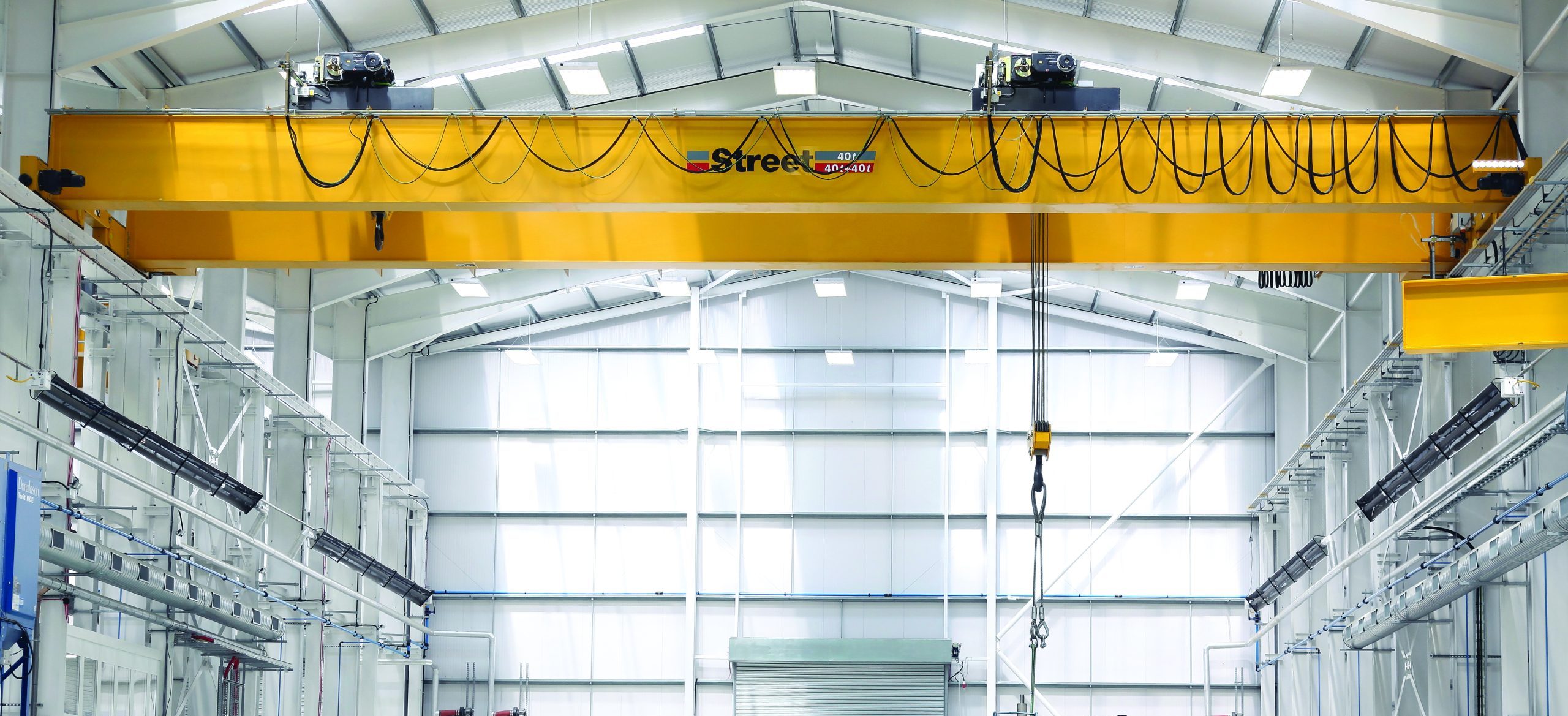
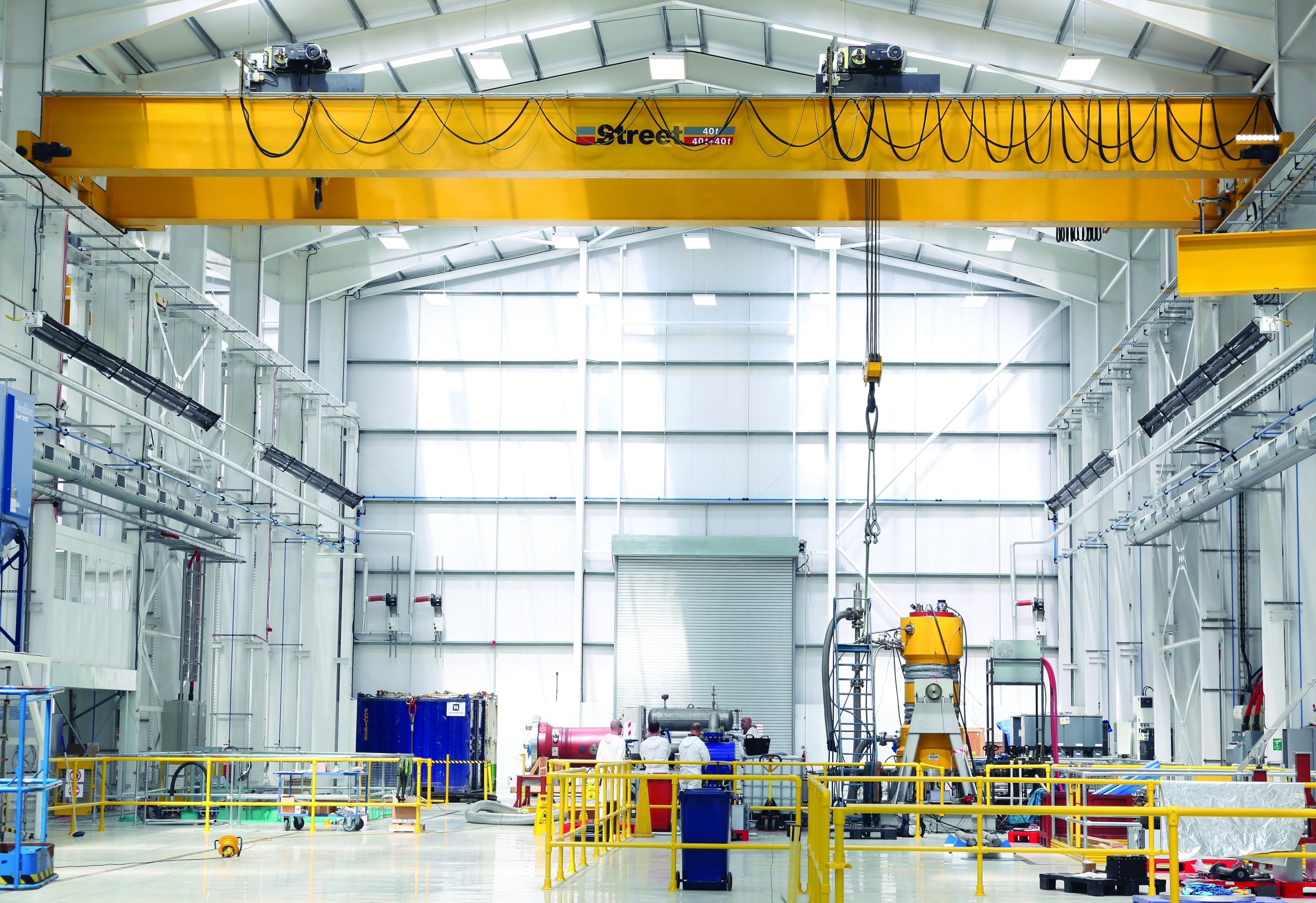
Double Girder Cranes: Maximise Your Lifting Potential
Our Double Girder Cranes are engineered for applications where lifting height, hook approach and duty push beyond the typical overhead crane brief. The double girder layout allows the hoist trolley to be packaged tightly into the available roof space, helping you achieve a higher top hook position and optimise side hook approaches, particularly where lift heights are large or the building envelope is restrictive. Where space above the runway is especially limited, a submerged trolley construction can be specified to protect lifting height.
Our Double Girder range covers up to 80 tonnes with ZX electric wire rope hoists, and up to 250 tonnes with VX open winch hoists for the most demanding duties. Top running cranes can be configured with four or eight long travel wheels, and multiple trolley gauges are available to suit allowable wheel loads and the lifting height you need.
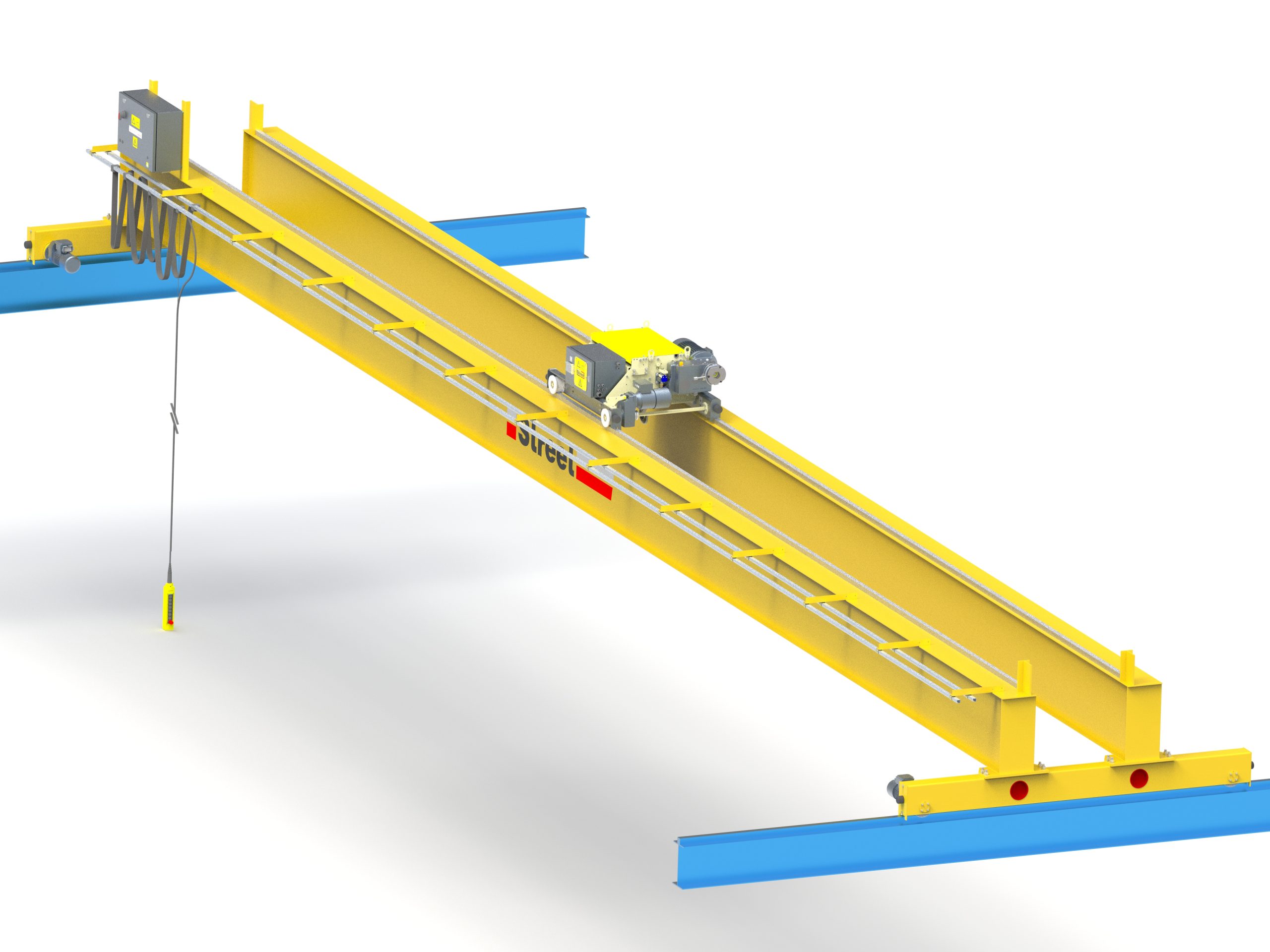
Advantages of a Street double girder crane?
In summary, choosing a double girder crane over a single girder crane provides enhanced lifting capacity, greater stability, improved workspace utilisation, and long-term cost savings. Trust Street Crane to deliver high-quality double girder cranes that meet your specific needs and elevate your operational efficiency.
Discover the Perfect Lifting Solution with Street
Engineered for Excellence and Durability
A double girder crane is a long-term asset. It needs to stay dependable under real duty cycles, remain straightforward to inspect, and support planned maintenance without unnecessary strip-down. That is why our standard Street ZX and custom VX double girder solutions are engineered around lifetime cost of ownership, with practical access for service tasks and built-in protection and monitoring to reduce the risk of unplanned downtime.
Hoist Options for your Application
Our double girder cranes are equipped with Street ZX electric wire rope hoists or VX open winch hoists, ensuring the right solution for your lifting requirement:
- ZX Electric Wire Rope Hoist (up to 80 tonnes): high-performance double girder capability with proven ZX design features for reliability, service access and controlled operation.
- VX Open Winch Hoist (up to 250 tonnes): custom engineered for the most demanding loads and duty cycles, with robust open winch design and options that support precision handling in heavy industrial environments.
To discuss a double girder project, call +44 (0)1298 812456 or email
website@streetcrane.co.uk
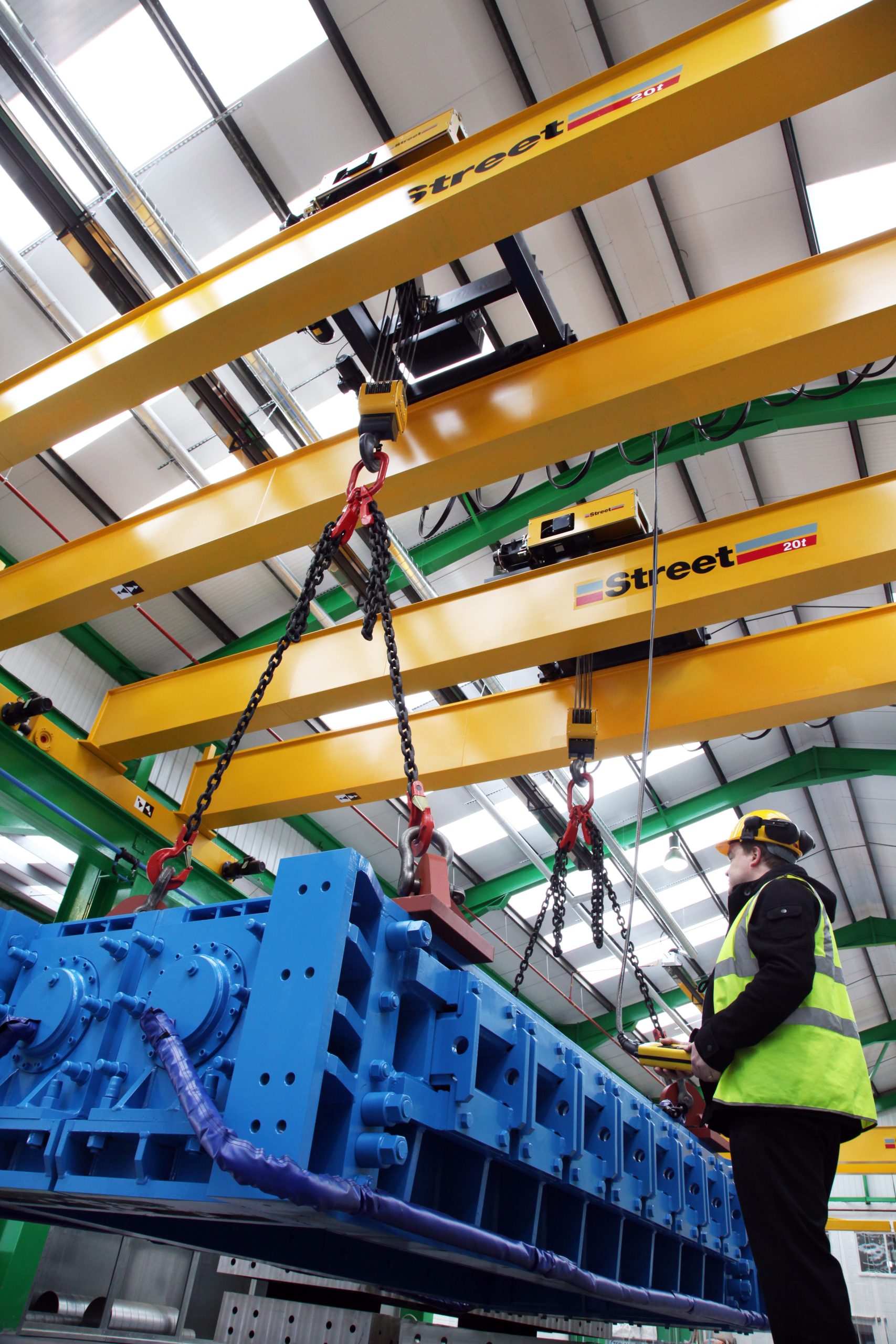
Discover the Perfect Lifting Solution with Street
Engineered for Excellence and Durability
A double girder crane is a long-term asset. It needs to stay dependable under real duty cycles, remain straightforward to inspect, and support planned maintenance without unnecessary strip-down. That is why our standard Street ZX and custom VX double girder solutions are engineered around lifetime cost of ownership, with practical access for service tasks and built-in protection and monitoring to reduce the risk of unplanned downtime.
Hoist Options for your Application
Our double girder cranes are equipped with Street ZX electric wire rope hoists or VX open winch hoists, ensuring the right solution for your lifting requirement:
- ZX Electric Wire Rope Hoist (up to 80 tonnes): high-performance double girder capability with proven ZX design features for reliability, service access and controlled operation.
- VX Open Winch Hoist (up to 250 tonnes): custom engineered for the most demanding loads and duty cycles, with robust open winch design and options that support precision handling in heavy industrial environments.
To discuss a double girder project, call +44 (0)1298 812456 or email
website@streetcrane.co.uk
Double Gider Crane FAQs
What is a top running double girder crane, and when is it the right choice?
A top running double girder crane travels on runway rails and uses two bridge girders to support the hoist trolley. It’s typically the right choice when your requirement is driven by lifting height, hook approach, heavier loads, higher duty, or when you want options such as walkways, auxiliary hoists, and specialist speed and control systems.
In practical terms, a double girder layout gives the designer more freedom to package the hoist trolley efficiently and to tailor the crane for demanding bays, tighter roof envelopes, or high cycle handling where long-term reliability and maintainability matter.
What capacities are available, and how do ZX and LX fit into the range?
Street double girder cranes are commonly specified with:
● ZX electric wire rope hoists for high performance lifting across a wide range of industrial applications, typically up to the upper end of the ZX range.
● VX open winch hoists where the application is particularly demanding, including heavier loads, higher duty classifications and process-oriented lifting.
Rather than starting with a headline tonnage alone, we’ll match the hoist platform to the duty cycle, lift height, operating conditions, control requirements and maintenance strategy, because those factors determine the most appropriate, most economical solution over the crane’s working life.
Why do double girder cranes help maximise lifting height and hook approach?
Double girder cranes are often selected when maximum lifting height is essential. In many buildings, a double girder arrangement can achieve a higher top hook position than a single girder within the same headroom. It can also improve side hook approach, especially when large lift heights are specified, because the trolley arrangement can be configured to use the available space more effectively.
Where space above the runway is particularly restricted, Street can offer specialised trolley constructions, including submerged trolley solutions, to protect lifting height and keep the working envelope practical.
What hoist and trolley configurations are available on double girder cranes?
Street’s double girder offering is not “one hoist fits all”. The hoist and trolley are selected around your constraints and performance needs, for example:
● Low profile and optimised geometry where lifting height is a priority.
● Different drum orientations (parallel or perpendicular to the crane beams) where side approach needs to be tuned to the bay layout.
● Single rope and twin rope arrangements depending on capacity, duty rating and handling precision.
● True vertical lift solutions in applications where load alignment and precision handling are critical.
This is where engineers and procurement teams both benefit, because the right configuration reduces compromise, improves productivity, and avoids costly workarounds later.
What control options are available, and when should we specify VFD-based advanced control?
We can supply double girder cranes with control solutions ranging from robust conventional control to advanced control using Variable Frequency Drives (VFDs). VFD-based control is often worth specifying when you need:
● Smooth acceleration and deceleration to protect loads, tooling and structures
● Repeatable positioning and predictable stopping behaviour
● Better operator confidence in busy bays or with high-value components
● Enhanced diagnostic visibility that supports planned maintenance
For demanding handling, VFD capability also opens the door to options such as micro-speeds, ramp-and-hold speed control, load-dependent speed, no-load express lift, and where appropriate, anti-sway to reduce load swing and improve cycle time and placement accuracy.
What safety and load protection features can be built into Street double girder solutions?
Street’s design philosophy puts safety and long-term reliability into the mechanics and the control approach, not just into labels. Depending on the hoist platform and specification, that can include:
● Braked gearbox hoist design to enhance load security and improve service access
● Overload prevention through load cut-out philosophy that is not reliant on crude current measurement alone
● Rope management solutions designed to reduce the consequences of slack rope and support consistent spooling
● Controlled braking and protection functions that help keep handling stable and predictable in daily use
The right safety package is always application-led. What’s appropriate for intermittent maintenance lifting is not the same as a high duty production bay.
How do Street double girder cranes reduce maintenance burden and lifetime cost?
We design around lifetime cost of ownership, because the real cost of a crane is rarely just the purchase price. The aim is to reduce wear points, shorten service time, and make inspections straightforward so maintenance can be planned, not reactive.
For procurement, that translates into lower downtime risk and fewer disruptive interventions. For engineers, it means practical access, maintainable layouts, and a design approach that does not rely on dismantling for routine checks.
What options can be integrated into a double girder crane?
Double girder cranes are inherently versatile and can be specified with features that support safe operation and maintainability in demanding bays, including walkways, provision for auxiliary hoists, and tailored speed and control systems.
Options should always be chosen with purpose. We’ll focus on what genuinely improves safety, access, uptime, and operational efficiency for your site.
Are double girder cranes suitable for heavy-duty and process-type applications?
Yes. Where applications become more demanding, for example heavy industry, high duty cycles, harsh environments or process handling, Street’s heavier duty hoist platforms and engineered configurations are designed to provide the robustness, precision, and maintainability those environments require.
If you’re dealing with challenging conditions, the key is to specify for reality: duty class, thermal environment, contamination, access, and the true handling cycle, not just the maximum load.
What do you need to size and specify a double girder crane correctly?
To build a correct specification, we typically need:
● Safe working load (SWL), plus any load spectrum details
● Span, runway length, and building constraints (headroom and obstructions)
● Required lifting height, and desired hook approaches
● Duty cycle and how the crane will be used day-to-day
● Control preference (pendant, radio, cab where applicable) and any process needs (precision placement, anti-sway, micro-speeds)
● Environment (indoor/outdoor, temperature, corrosion risk, dust, moisture)
● Site access and maintenance preferences
This upfront clarity prevents compromises later and ensures you get a crane that fits the bay, the workflow and the lifecycle plan.
Get Started Today
Have any questions or want a quote please contact us