



Precast Concrete Production Cranes
Lifting engineered for dependable uptime.
In a precast plant, the overhead crane is the backbone of production.
From setting formwork and handling shutters, to moving concrete buckets, stripping moulds, turning panels and feeding the yard, cranes are in near-constant motion all shift. That places heavy demands on duty rating, control quality, and long-term reliability in abrasive, dusty conditions.
Street Crane designs and builds overhead lifting systems in the UK for precast concrete production, combining robust mechanical engineering with VFD-based advanced control for smooth acceleration, stable travel and precise placement when the lift has to be right first time.
Speak to our sales team today on +44 (0)1298 812456 or complete the enquiry form to discuss your lifting requirements.








Crane solutions for the precast concrete industry
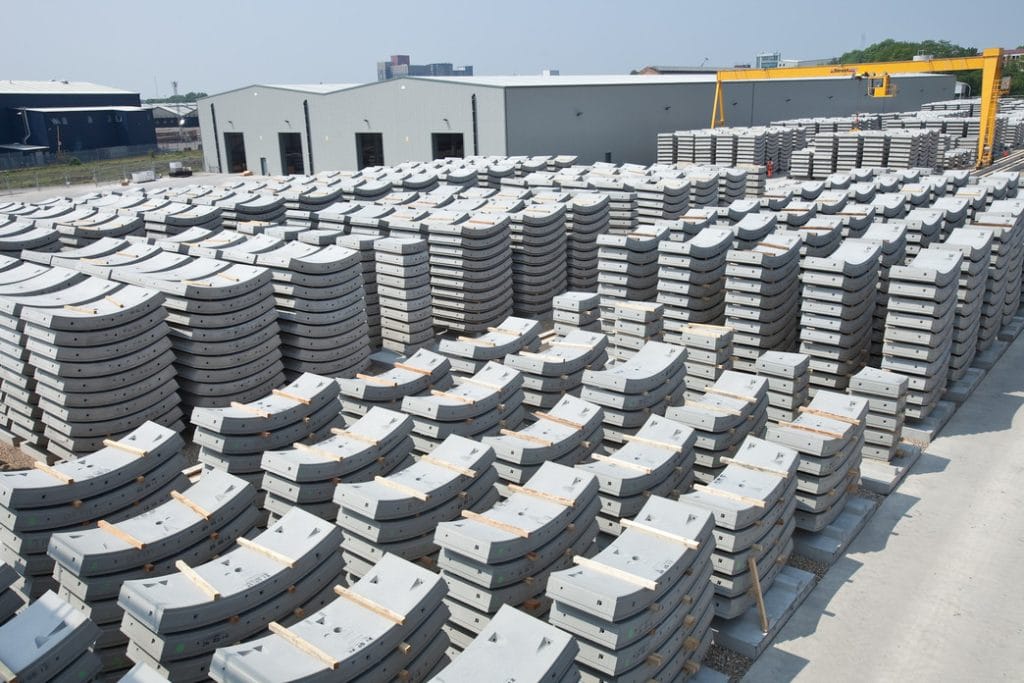
Precast production is a sequence of repeatable, high-load tasks. Heavy steel moulds are positioned and removed at pace. Wet concrete must be delivered accurately, without excessive swing. As products cure, the crane is then asked to provide the controlled breakout force needed to release units cleanly, followed by careful handling to protect edges and finishes.
Many plants also require turning or flipping operations, taking flat-cast panels into vertical storage, and moving long beams or girders out to the yard and onto trailers.
Because the crane touches almost every stage of the process, your lifting system needs to support cycle time without compromising safety. That often means a coordinated approach: full-bay overhead cranes for production coverage, plus lower-level cranes such as wall-travelling jibs or semi-portal solutions to serve specific stations and keep traffic flowing.
Cranes
We have a large range of pre-engineered cranes to meet the needs of almost all industrial applications up to 250 tonnes capacity.
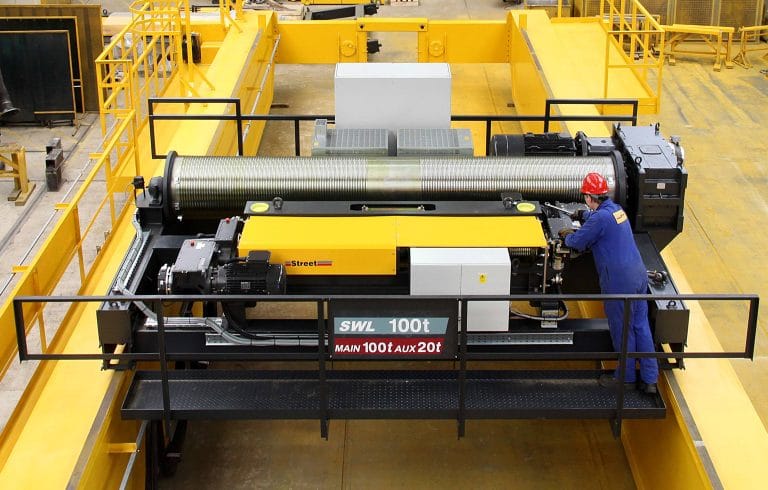
Components & Hoists
Designed for ease of crane assembly anywhere in the world, Street Crane kits include everything needed to build a complete overhead crane except the steelwork for the main bridge girder.
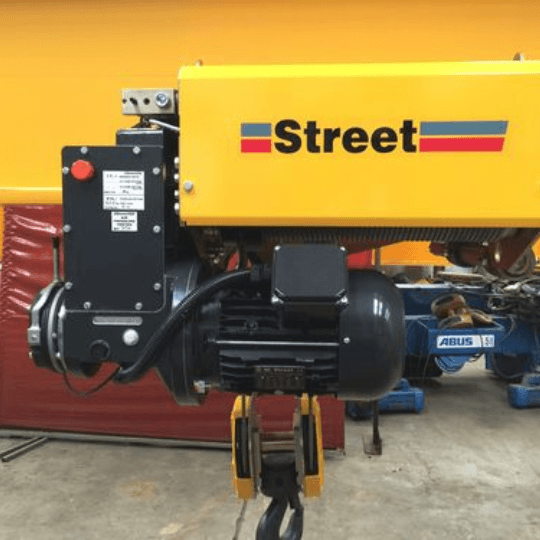
Spares & Servicing
Only genuine Street parts will ensure the lifelong productivity and reliability of your lifting equipment. Street parts are available from our warehouses in the UK and the USA. We also supply through our network of official distributors around the globe.
Overhead cranes engineered for precast concrete operations
Concrete production creates harsh conditions for lifting equipment. Dust is abrasive, duty cycles are severe, and runways may extend from inside bays out into exposed yards.
We engineer cranes that are built for this reality, with practical design choices that support long service life and straightforward maintenance access, helping you protect uptime and reduce lifetime ownership cost.
Key design considerations
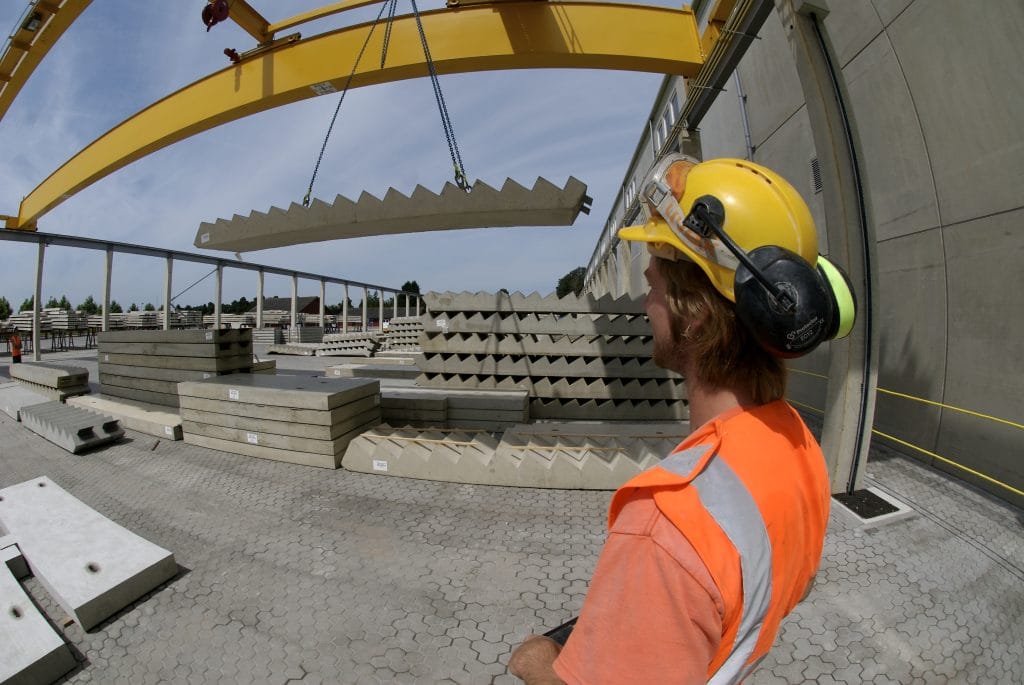
Precast crane specification starts with duty. Continuous handling through a shift demands a system designed for arduous service, with structures, hoists and travel motions selected for sustained work, not occasional lifting. Control quality is just as important. When carrying wet concrete in a bucket, smooth acceleration and deceleration are essential to reduce load swing and improve operator confidence.
During stripping and de-moulding, the crane must deliver controlled lifting force without shock loading that can damage moulds, rigging or the product itself.
If your process includes turning or flipping, the handling strategy becomes even more critical. The crane, hoist arrangement and rigging method must support stable rotation and predictable motion to protect product integrity. Yard transfer adds another layer, particularly where long units require tandem lifts or where the runway transitions between internal and external environments. This is where carefully specified operating modes, interlocks and a clear safety strategy help reduce risk, especially when multiple cranes, lower-level systems and people are working in the same area.
Precast Concrete Crane Solutions
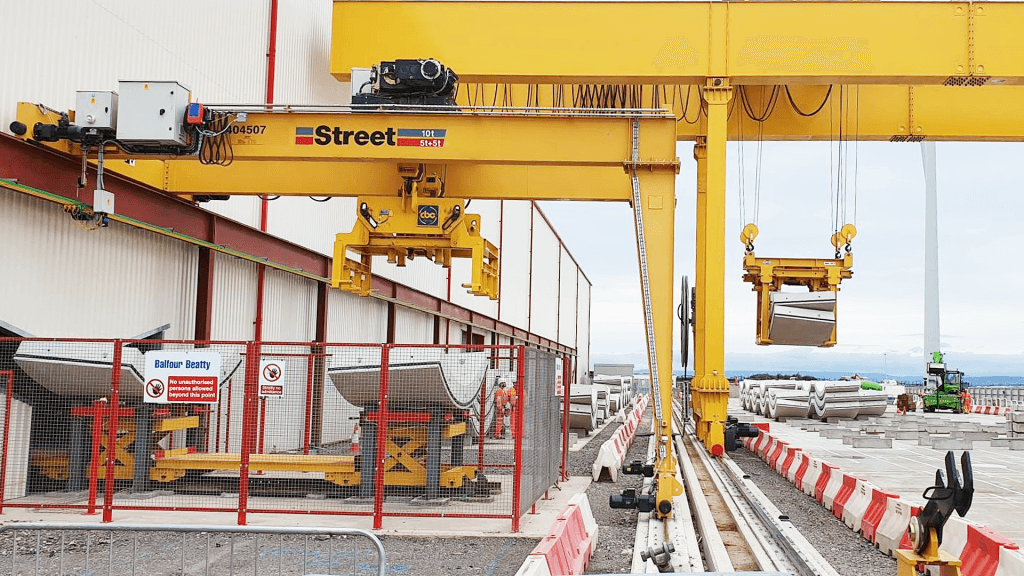
ZX double girder overhead cranes
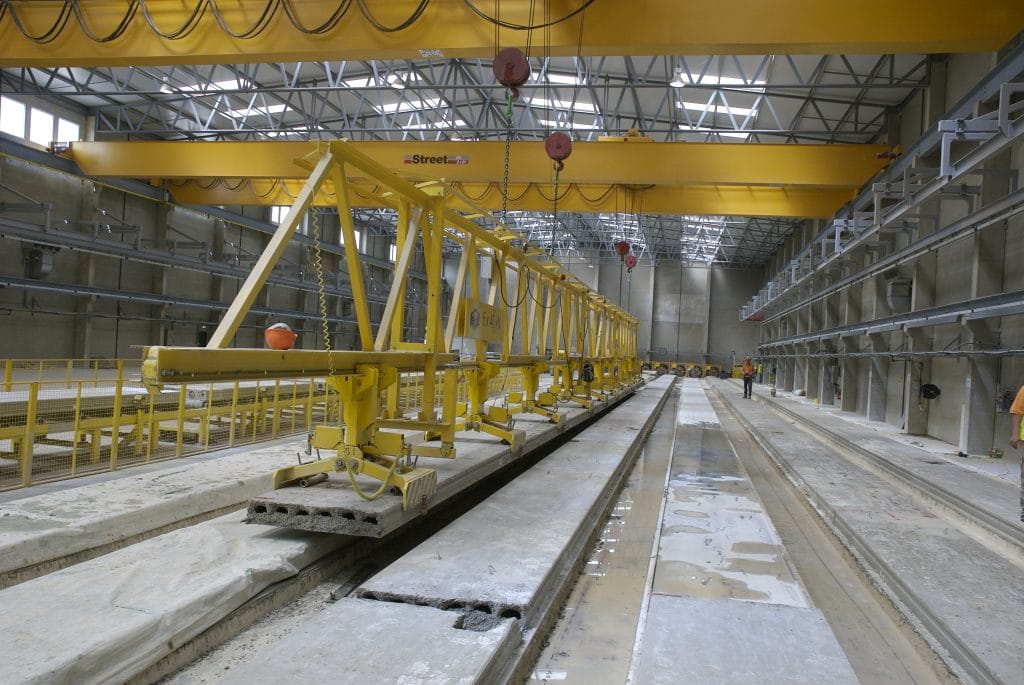
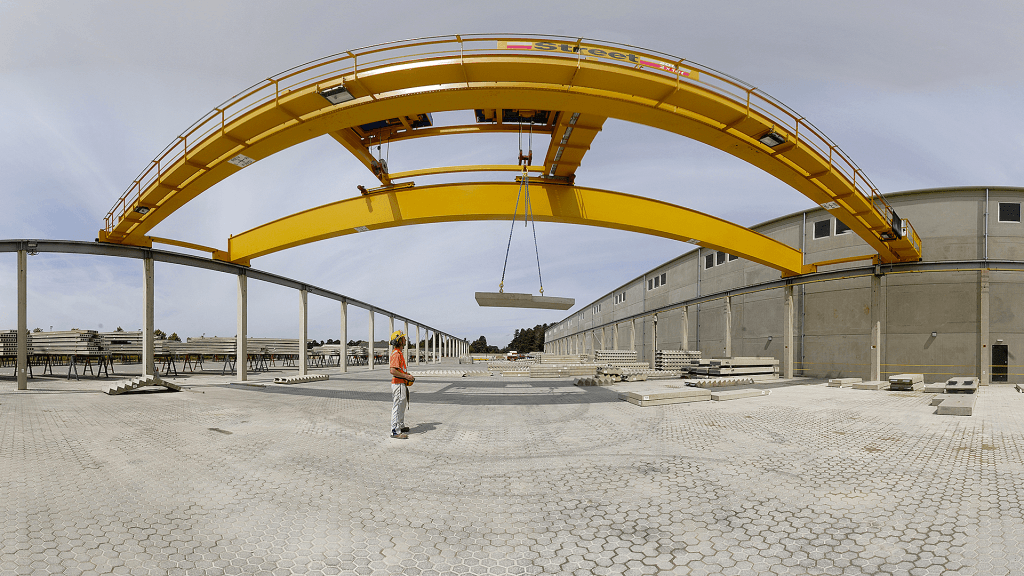
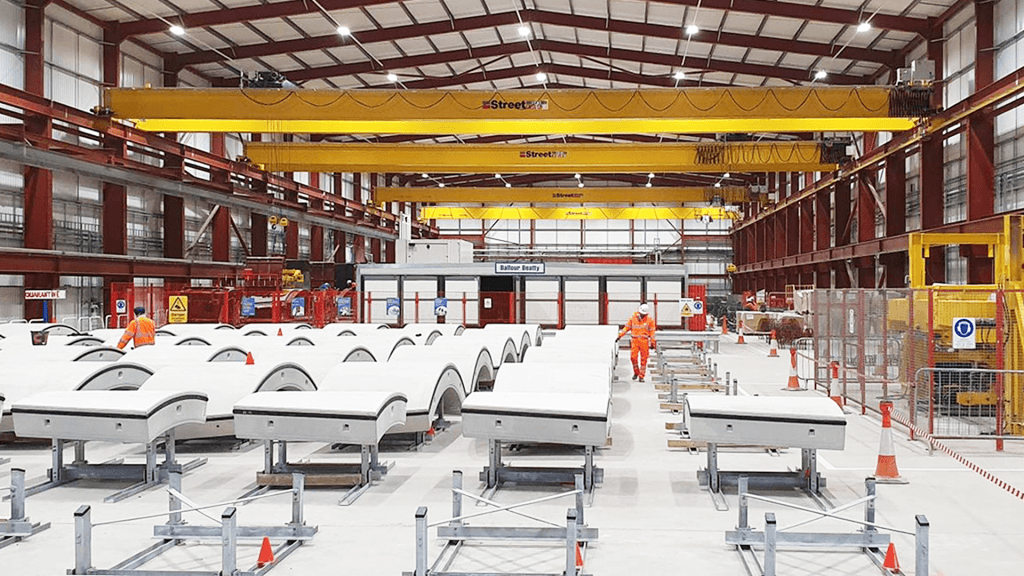
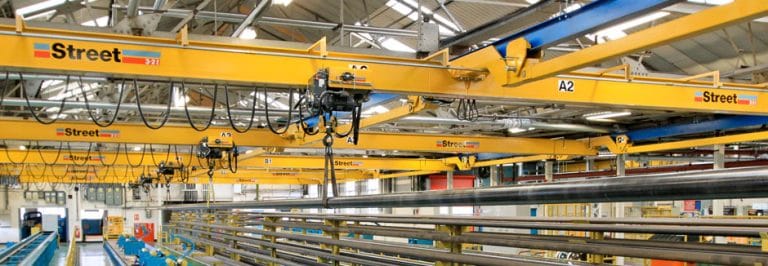
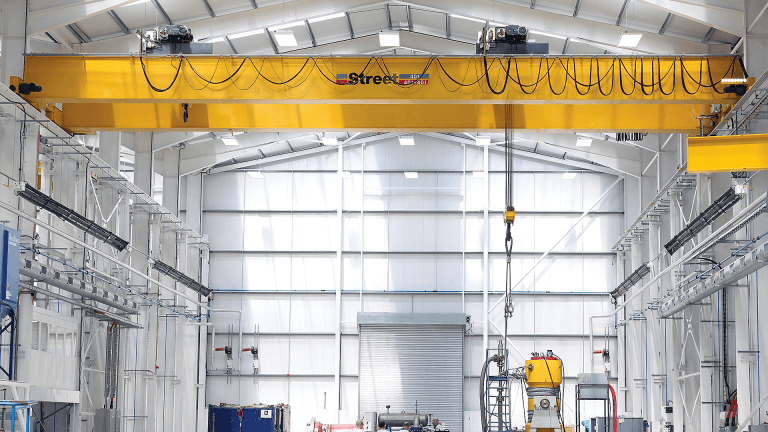
For most precast production halls, a double girder overhead crane provides the stability, hook height and controlled handling needed for mould movements, bucket handling, stripping and finished unit transfer. It is a strong foundation where cycle time matters and the crane must perform consistently in severe service conditions.
VX heavy-duty cranes
Where handling is continuous, loads are consistently high, or uptime risk is unacceptable, VX open-winch hoist cranes provide heavy-duty performance with maintainability in mind. The open layout supports practical inspection and service access, which is valuable when cranes are running hard and planned maintenance windows need to be used efficiently.
Wall-travelling jib cranes
Many precast facilities benefit from a two-level approach. Wall-travelling jibs can serve mould preparation, shutter and insert handling, or local maintenance tasks beneath the main bridge crane’s coverage. This reduces congestion, keeps frequent small lifts close to the workstation, and helps protect the availability of the main crane for production-critical moves.
Portal and semi-portal cranes
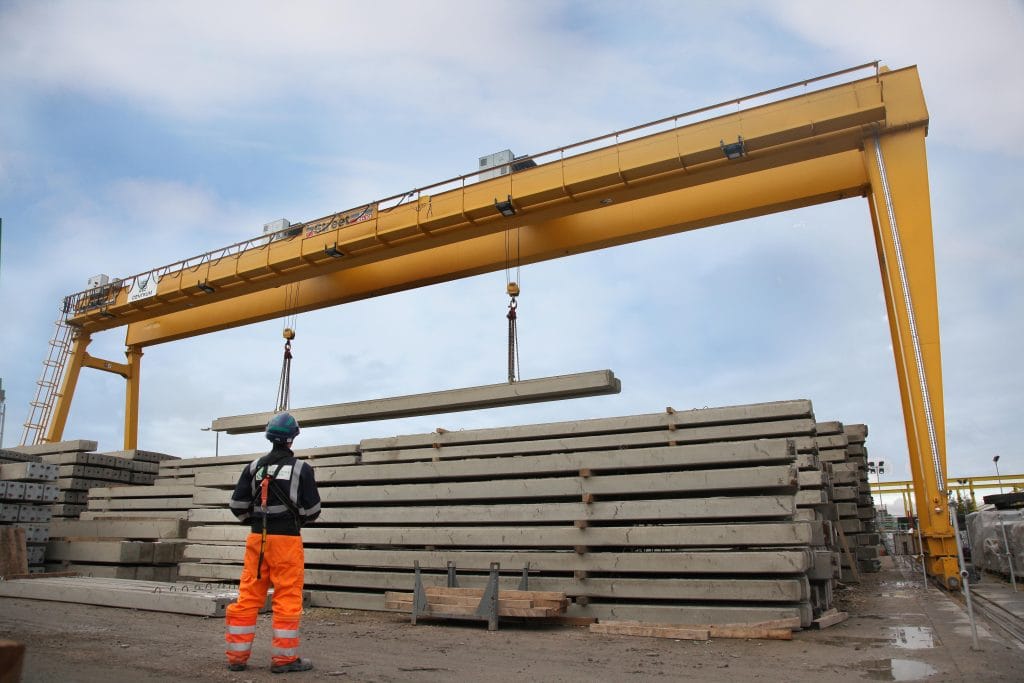
Precast does not finish at the casting bed. Stockyard handling and loading efficiency have a direct impact on dispatch. Portal and semi-portal cranes are well suited to moving cured units through long yards and placing them onto trailers, with travel performance specified to suit the loading cycle and yard geometry. Where the building structure cannot support runways, these solutions also provide lifting coverage without relying on roof steelwork.
Making advanced lifting practical in precast production
In precast concrete production, advanced control is about predictable movement and repeatable cycles.
VFD-based advanced control supports smooth acceleration and braking, stable low-speed travel, and more consistent handling that helps reduce swing when transporting wet concrete or long units. When operators can place buckets, moulds and finished products more confidently, you reduce rework, reduce the risk of product damage, and maintain a steadier production rhythm.
Monitoring functions can also support severe-duty operation by helping maintenance teams understand usage patterns and plan interventions before performance is affected. In a plant where the crane is always working, that visibility can be the difference between planned maintenance and an unplanned stoppage.
Working as part of your precast production flow
Precast plants are systems. The crane has to work with your casting beds, turning stations, yard routes, and loading plans, not against them.
We start by understanding your production sequence, lift points, clearances and handling constraints, then design lifting coverage that supports each stage, from formwork placement through to yard transfer.
Where you need multiple cranes, lower-level handling systems or defined operating zones, we engineer the right controls and safety approach so teams can work efficiently and confidently, shift after shift.
Engineering confidence for precast lifting
Precast lifting demands controlled performance. With over 80 years of lifting experience, our engineers work with you to define the loads, the duty cycle, the process steps and the site geometry, then configure a crane solution that delivers predictable motion, maintainable design and safe operation for the long term.
Call +44 (0)1298 812456 or email website@streetcrane.com.
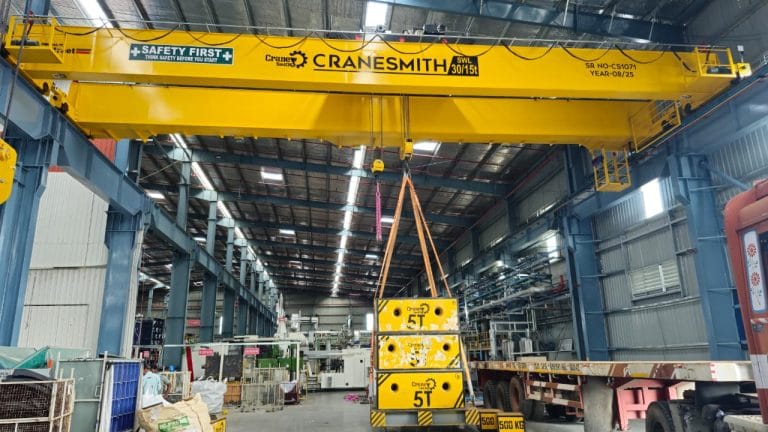
Case Studies
Get Started Today
Have any questions or want a quote please contact us