



Cranes for Train Manufacturing
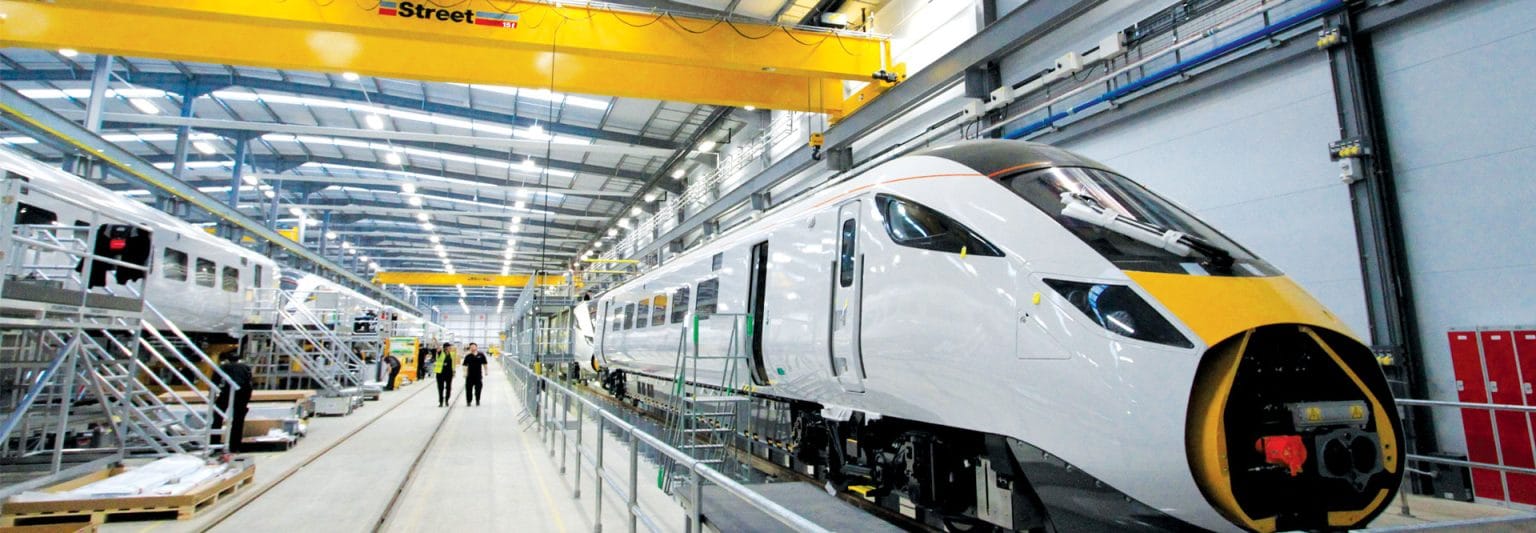
Safe, precise lifting, built to keep bays productive.
Rail lifting is defined by weight, length and consequence. Car bodies, bogies, wheelsets and long assemblies are awkward to handle, often in dense workshops where clearances are tight and time pressure is real.
Whether you’re building new rolling stock or carrying out overhaul and refurbishment, you need controlled motion, reliable availability and lifting equipment that stays practical to maintain.
Street Crane designs and builds overhead crane systems in the UK for rail manufacturing and maintenance environments, with VFD-based advanced control for smooth acceleration, stable travel and precise low-speed placement when alignment matters.
Speak to our sales team today on +44 (0)1298 812456 or complete the enquiry form to discuss your lifting requirements.






Crane solutions for railway manufacturing and maintenance
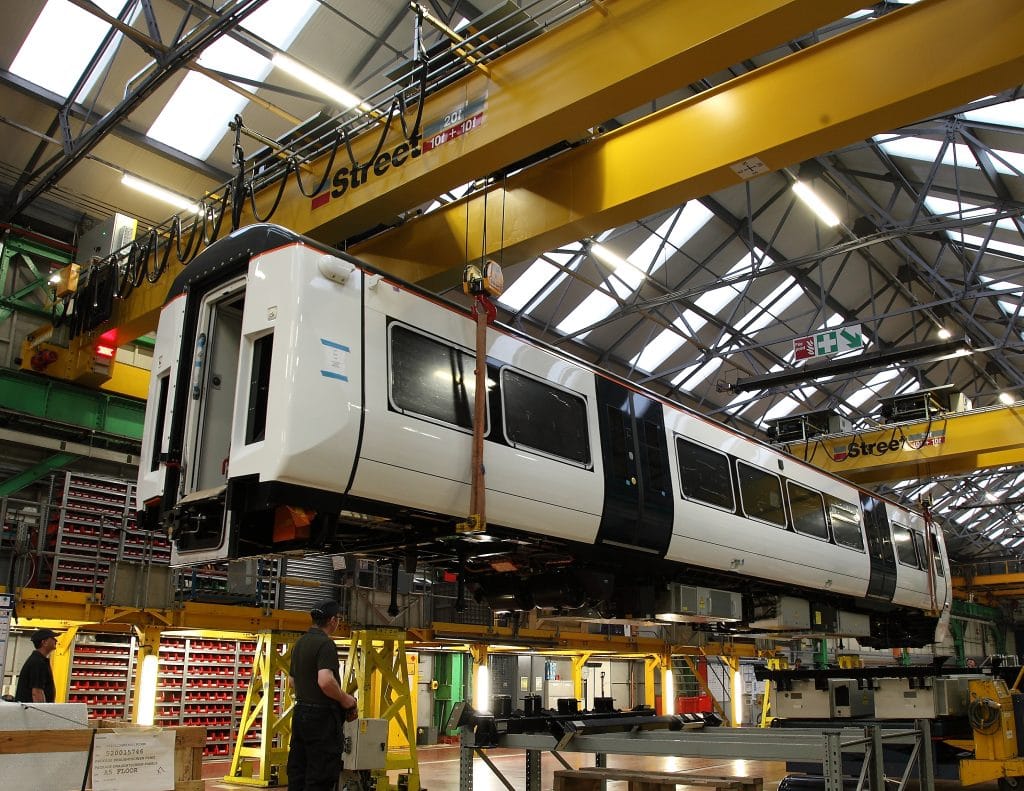
Rail operations typically fall into two working environments, each with its own lifting challenges.
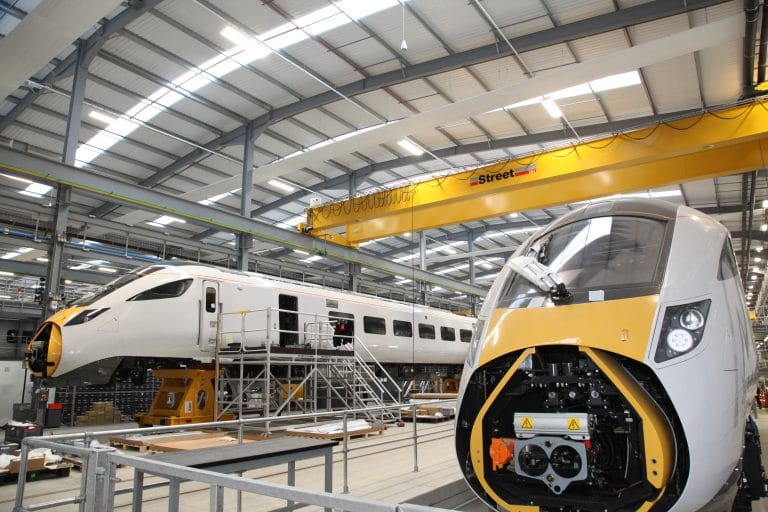
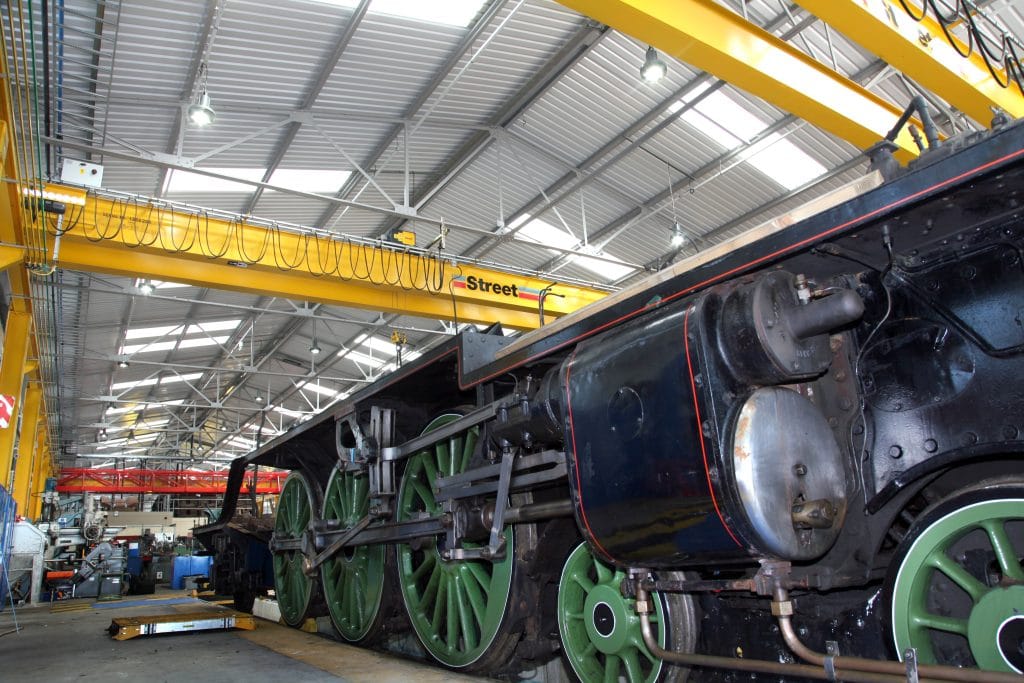
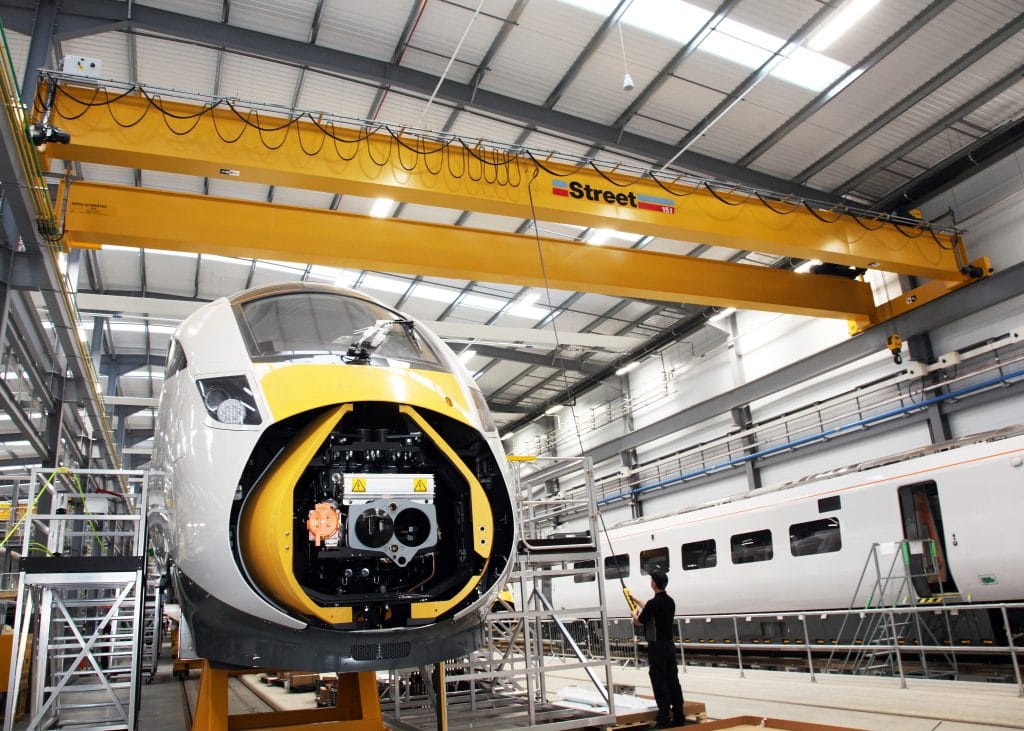
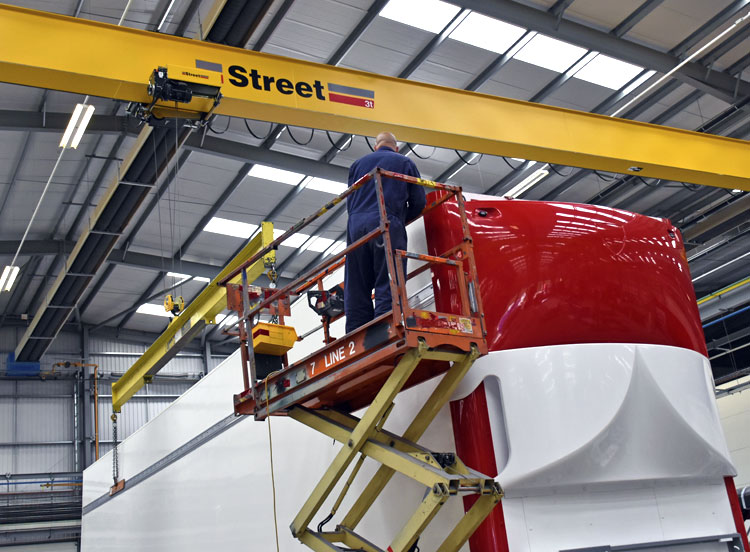
In rolling stock manufacture, cranes support frame handling and assembly flow. They may flip chassis and frames to improve welding access, position major equipment such as engines and auxiliaries, and perform the critical “marriage” lift, lowering car bodies onto bogies with controlled inching to align centre pins accurately.
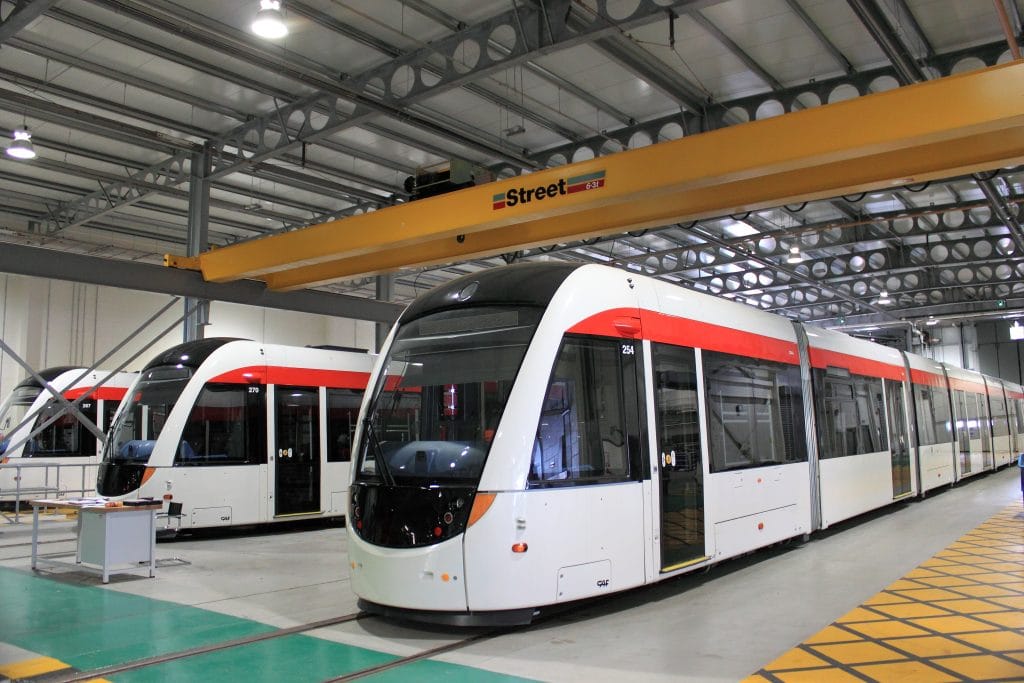
In back shops and refurbishment facilities, cranes enable heavy maintenance work: lifting car ends for bogie swaps, removing power packs or assemblies through roof access, and moving wheelsets and axles through wheel shop machinery. Across both environments, the common requirements are predictable control, safe handling of long loads, and availability you can count on.
Cranes
We have a large range of pre-engineered cranes to meet the needs of almost all industrial applications up to 250 tonnes capacity.
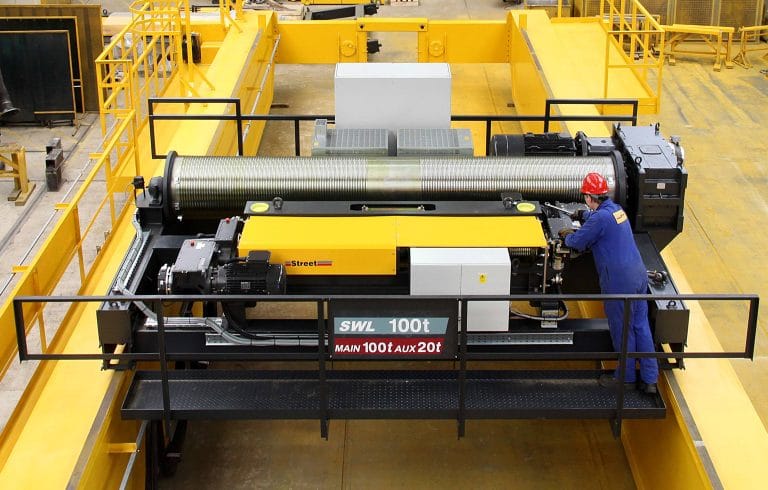
Components & Hoists
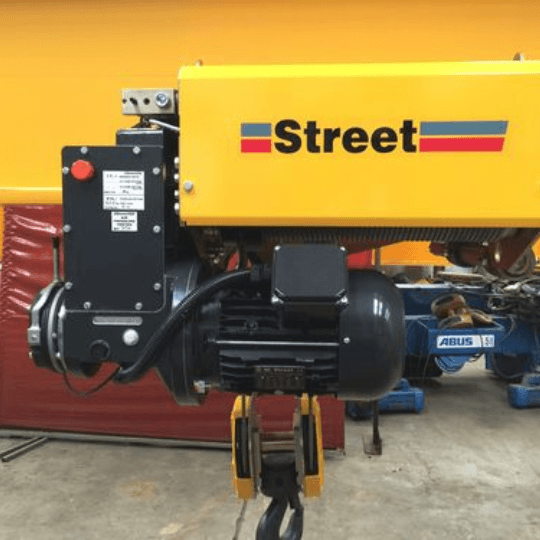
Designed for ease of crane assembly anywhere in the world, Street Crane kits include everything needed to build a complete overhead crane except the steelwork for the main bridge girder.
Spares & Servicing
Only genuine Street parts will ensure the lifelong productivity and reliability of your lifting equipment. Street parts are available from our warehouses in the UK and the USA. We also supply through our network of official distributors around the globe.
Overhead cranes engineered for rail environments
Rail workshops are hard-working places. Duty can be heavy, loads are often asymmetric, and lifting happens close to people, equipment and fixed infrastructure.
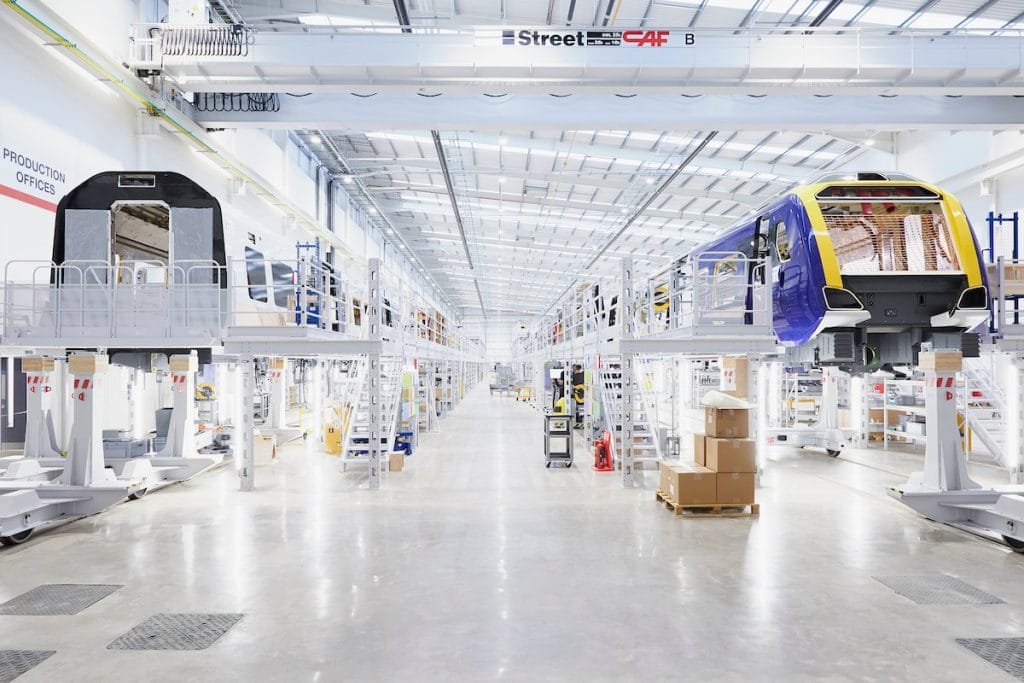
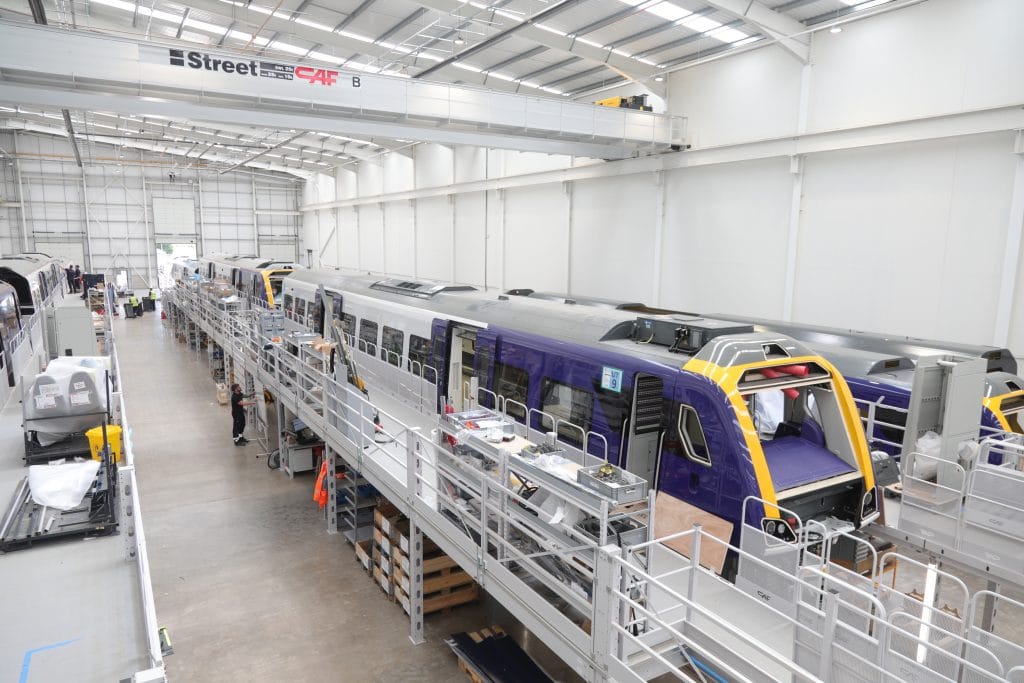
Our cranes are engineered with availability, reliability and ease of maintenance in mind, supporting long service life with practical access for inspection and servicing. Controlled motion is designed in from the outset, helping operators manage long loads and critical alignment lifts with confidence.
Key design considerations
Rail loads are rarely “neat”. Locomotives and car bodies can be weight-biased, long and flexible, and often must be positioned within tight tolerances. That drives three key choices: the crane’s stability and hoist arrangement, the control strategy, and the safety approach.
VFD-based advanced control supports smooth acceleration and deceleration and stable low-speed travel, which is essential for precise placement during marriage lifts and bogie work. For long loads, spreader beams and multi-point lifting distribute forces to reduce the risk of bending or whip, and the crane’s motion control helps keep travel steady and predictable.
Where two cranes are needed to lift a full car body or long assembly, tandem operation can be configured so both cranes remain level and coordinated under a single radio control. In busy bays, defined operating zones and interlocking safety strategies can also be engineered where required, helping reduce the risk of travelling over restricted areas while carrying a load.
Rail crane solutions
ZX double girder overhead cranes
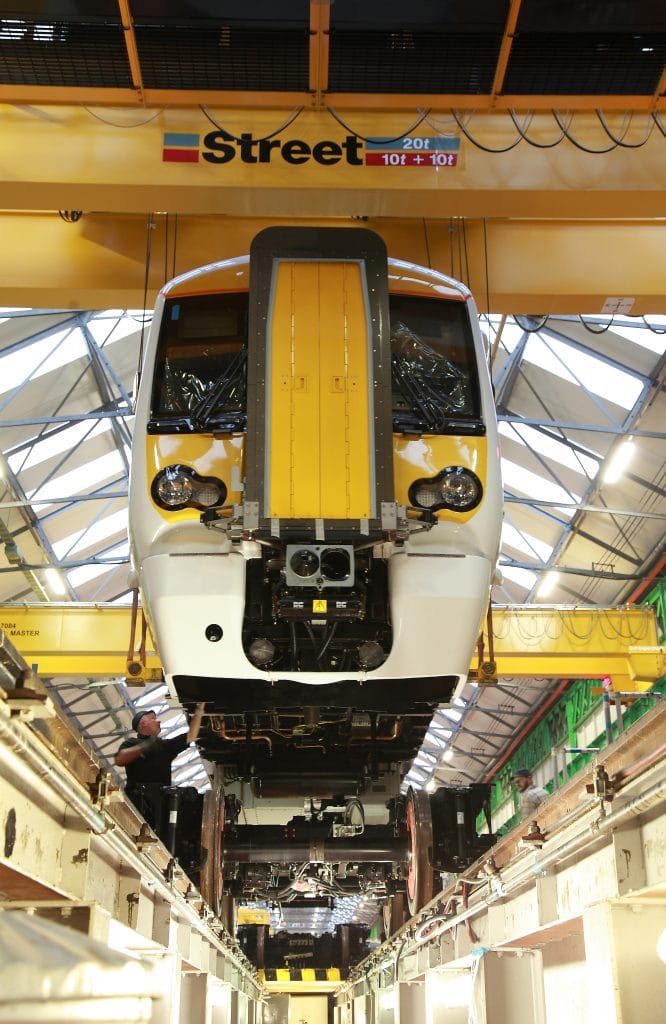
For many rail facilities, double girder overhead cranes with ZX hoists provide the stiffness and stability needed for long, heavy loads and controlled placement. They are well suited to car body handling, bogie work and major equipment installation, and can be configured with suitable hoisting arrangements and speeds to support accurate low-speed alignment.
ZX wire rope hoists
Where rail operations require dependable lifting with minimal downtime, ZX electric wire rope hoists are commonly specified to support availability and reduce routine maintenance burden. Combined with VFD-based advanced control across crane motions, they help deliver stable handling and precise final placement.
VX heavy-duty cranes
Where duty is intense, loads are high, or the crane is central to continuous overhaul activity, VX open-winch cranes provide heavy-duty capability with maintainability in mind. This is a strong option when service access, predictable performance and long-term reliability are priorities in a hard-working rail environment.
Portal and semi-portal cranes
Rail facilities often include laydown areas and external handling zones for assemblies and infrastructure items. Portal cranes and semi-portal cranes provide lifting coverage where buildings cannot support overhead runways, supporting controlled handling in yards and loading areas.
Wall-travelling jib cranes
Where you need fast, local handling along the length of a workshop bay, wall-travelling jib cranes can provide full-length hook coverage beneath or alongside main cranes. They are useful for workstation lifting, parts handling and maintenance tasks, helping keep the main overhead crane available for heavier, bay-critical lifts.
Making advanced lifting practical in rail workshops
In rail, advanced control needs to translate into safer handling and accuracy.
VFD-based advanced control supports smooth travel and controlled hoisting, helping operators manage long, heavy loads with reduced swing and more predictable stopping behaviour.
That matters when you are aligning a car body onto bogies, positioning asymmetric loads, or moving long assemblies through dense workshops where clearances are limited. It also supports consistent handling across shifts, which helps reduce risk and improve the reliability of routine lifting operations.
Working as part of your depot and production programme
Rail lifting is rarely a standalone specification. It must fit the way your bays operate, how bogies and wheelsets are moved, where marriage lifts take place, and how work is sequenced during manufacture, overhaul or refurbishment.
We work with your engineering, operations and maintenance teams to define lift paths, clearances, load characteristics and duty requirements, then design a crane solution that supports safe working, controlled motion and practical maintenance access.
Where tandem operation, auxiliary hoists or defined operating zones are needed, we engineer them into the system so lifting supports productivity rather than constraining it.
Built for long-term depot reliability
Rail workshops run on bay availability. Drawing on more than 80 years of lifting experience, we help you specify crane systems that support safe levelling for long loads, precise low-speed placement for marriage and bogie work, and practical access for inspection and maintenance, so your facility stays productive through manufacture, overhaul and refurbishment cycles.
Call +44 (0)1298 812456 or email website@streetcrane.com.
Case Studies
Get Started Today
Have any questions or want a quote please contact us